Modeling Sustainable Health Care at UC San Diego Health
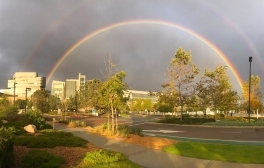
UC San Diego Health has become a leader in advancing and modeling sustainable health care practices, with a goal of achieving carbon neutrality by 2025.
UC San Diego Health has become a leader in advancing and modeling sustainable health care practices, with a goal of achieving carbon neutrality by 2025.
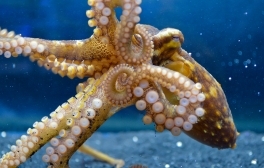
Research led by UC San Diego and Harvard has traced the evolutionary adaptations of octopus and squid sensing capabilities. The researchers describe for the first time the structure of an octopus chemotactile receptor, which octopus arms use for taste-by-touch exploration of the seafloor.
The University of California San Diego Library’s Author Talk Series is concluding its third consecutive year of programming on April 17 with internationally-acclaimed author and prominent UC San Diego alum, Kim Stanley Robinson ’74, PhD ’82.
Scientists have traced the origin of a unique protein key to vertebrate’s camera-like vision back 500 million years. Their analysis of more than 900 genomes across the tree of life revealed that the protein came through horizontal gene transfer from foreign bacterial genes.
UC San Diego scientists find a protein associated with liver cancer may actually be the key to protecting against it. By blocking ferroptosis, a form of liver cell death, the protein prevents liver damage and its progression to cancer.
For the first time, large amounts of melatonin are being made by bacteria. Engineered E. coli are feeding on glucose and churning out melatonin, the hormone that controls circadian rhythms. This mode of manufacturing is growing thanks in part to bioengineering advances made at UC San Diego.
Keep up with all the latest from UC San Diego. Subscribe to the newsletter today.