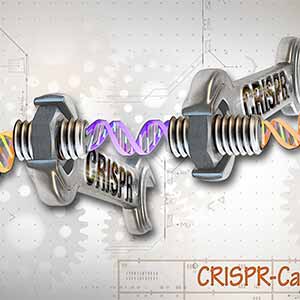
In just the past few years, researchers have found a way to use a naturally occurring bacterial system known as CRISPR/Cas9 to inactivate or correct specific genes in any organism. CRISPR/Cas9 gene editing activity runs continuously, though, leading to risk of additional editing at unwanted sites. Now, researchers at University of California, San Diego School of Medicine, Ludwig Cancer Research and Isis Pharmaceuticals demonstrate a commercially feasible way to use RNA to turn the CRISPR-Cas9 system on and off as desired — permanently editing a gene, but only temporarily activating CRISPR-Cas9.
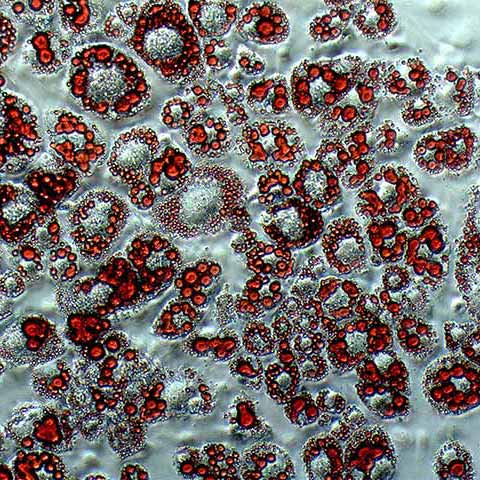
Researchers at the University of California, San Diego report new insights into what nutrients fat cells metabolize to make fatty acids. The findings pave the way for understanding potential irregularities in fat cell metabolism that occur in patients with diabetes and obesity and could lead to new treatments for these conditions.
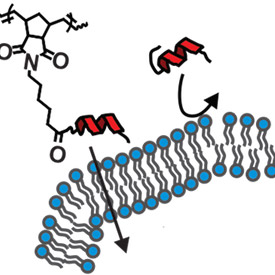
Peptides promise to be useful drugs, but they're too easily digested and can’t get into cells without help. Chemists at UC San Diego now show that peptides can be protected from digestion and delivered into cells without changing their biological function by rearranging them into dense brushes.
Just six months after coming online, Comet, the new petascale supercomputer at the San Diego Supercomputer Center (SDSC) at the University of California, San Diego, is already blazing new paths of discovery, thanks in part to its role as a primary resource for an assortment of science gateways that provide scientists across many research domains with easy access to its computing power.
A new proof-of-concept funding competition will pit UC San Diego undergraduate research teams against each other to develop projects or products with commercial potential. It’s part of a renewed campus focus on innovation, entrepreneurism, and moving university problem-solving ideas into the marketplace.
The Open Science Grid, a multi-disciplinary research partnership specializing in high-throughput computational services funded by the U.S. Department of Energy and the National Science Foundation, has added high-performance virtualized clusters to its global infrastructure by taking advantage of a new and unique capability of Comet, the National Science Foundation’s newest supercomputer at the San Diego Supercomputer Center (SDSC).