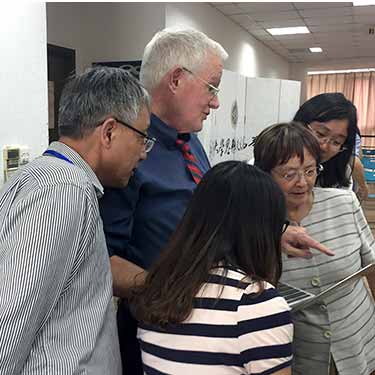
UC San Diego is ranked the 14th best university in the world for the third consecutive year, according to the 2015 Academic Ranking of World Universities (ARWU). The rankings were recently released by the Center for World-Class Universities at Shanghai Jiao Tong University, a public research university located in Shanghai, China, renowned as one of the oldest and most prestigious and selective universities in China. In addition, UC San Diego’s programs in life sciences, engineering, computer science, chemistry, and economics are ranked among the top 20 in the world. Nationally, UC San Diego is listed as the 12th best university.
The introduction of a new prescription smoking-cessation aid, varenicline, in 2006 has had no significant impact on the rate at which Americans age 18 and older successfully quit smoking, according to a study led by researchers at University of California, San Diego School of Medicine. The findings, published online August 17 in Tobacco Control, suggest that the primary effect of varenicline has been to displace the use of older tobacco addiction therapies, such as nicotine patches and the antidepressant, bupropion.
CSE professor Pavel Pevzner and recent postdoc Phillip Campeau are launching a six-part series of courses as a Specialization mini-degree on Coursera teaching bioinformatics, culminating in a Capstone Project that will prepare students to solve real-world research challenges.
Ilkay Altintas has been appointed Chief Data Science Officer of the San Diego Supercomputer Center (SDSC) at the University of California, San Diego, effective immediately. Altintas, who joined SDSC in 2001, will lead the strategic coordination of all computational data science activities at SDSC while overseeing application-based solutions and their related technologies.
Protein Kinase C is a family of enzymes that controls the activity of other proteins in a cell by attaching chemical tags. That simple act helps determine cell survival or death. When it goes awry, a number of diseases may result. In a study, researchers at University of California, San Diego School of Medicine reveal a more accurate structure of PKC, providing new targets for fine-tuning the enzyme’s activity as needed to improve human health.
The mechanisms that allow the liver to repair and regenerate itself have long been a matter of debate. Now researchers at University of California, San Diego School of Medicine have discovered a population of liver cells that are better at regenerating liver tissue than ordinary liver cells, or hepatocytes. The study is the first to identify these so-called “hybrid hepatocytes,” and show that they are able to regenerate liver tissue without giving rise to cancer.