Four UC San Diego Faculty Earn Prestigious 2026 Sloan Research Fellowships

Published Date
Article Content
University of California San Diego faculty members Valentina Di Santo, Fleur Ferguson, Mattia Serra and Hao Zhang have been named 2026 Sloan Research Fellows, an honor given by the Alfred P. Sloan Foundation to promising early-career researchers since 1955.
Representing UC San Diego’s Halıcıoğlu Data Science Institute (HDSI), the School of Physical Sciences, Scripps Institution of Oceanography and Skaggs School of Pharmacy and Pharmaceutical Sciences, the four scientists join a cohort of 126 researchers recognized by the Sloan Foundation this year. The fellowships acknowledge researchers whose creativity, innovation and research accomplishments set them apart as the next generation of leaders.
“We are pleased to see these four world-class faculty recognized with such a prestigious honor,” said Chancellor Pradeep K. Khosla. “The selection of these four talented faculty reflects the extraordinary talent, creativity and leadership potential of our early-career scholars. Their breakthroughs will continue to inspire our students, shape the future of science and advance the mission of UC San Diego.”
Fellows in this year’s cohort come from 44 institutions across the United States and Canada in the fields of chemistry, computer science, Earth system science, economics, mathematics, neuroscience and physics. Sloan Research Fellowships are considered highly competitive, with more than 1,000 researchers nominated by their fellow scientists each year.
Winners are selected by an independent panel of senior scholars based on their research accomplishments, creativity and leadership potential. Each fellow receives a two-year, $75,000 award, which can be used flexibly to advance the fellow’s research.
“The Sloan Research Fellows are among the most promising early-career researchers in the U.S. and Canada, already driving meaningful progress in their respective disciplines,” said Stacie Bloom, president and chief executive officer of the Alfred P. Sloan Foundation. “We look forward to seeing how these exceptional scholars continue to unlock new scientific advancements, redefine their fields, and foster the wellbeing and knowledge of all.”
Since the program’s inception, 156 faculty from UC San Diego have received Sloan Research Fellowships. Here are UC San Diego’s 2026 recipients:
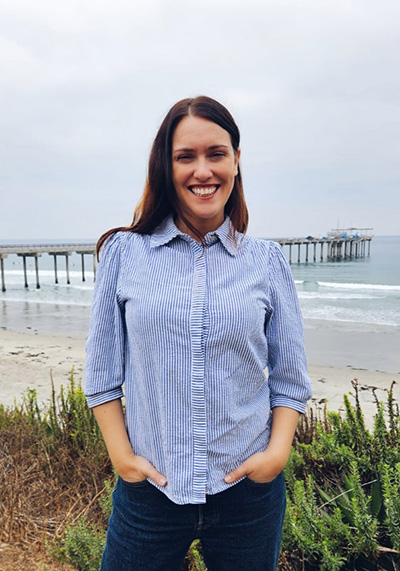
Assistant Professor, Marine Biology Research Division, Scripps Institution of Oceanography
Valentina Di Santo is a fish ecophysiologist and biomechanist, whose research examines how fishes move through complex and changing environments. Since joining Scripps Institution of Oceanography in 2024, she has led an integrative research program focused on locomotor performance across evolutionary diversity and life history stages, with particular emphasis on the impacts of climate change on movement, stability and energetic efficiency. By linking biomechanics, physiology and environmental change, her research clarifies how aquatic animals respond to ocean warming, acidification and habitat complexity, while also informing the design of bio-inspired robotic systems.
Di Santo received her undergraduate degree from University of Florence (Italy) and her PhD from Boston University. After postdoctoral training at Harvard University, she began her faculty career as an assistant professor at Stockholm University (Sweden) and as a visiting scientist at the Marine Biological Laboratory in Woods Hole, Massachusetts, before moving to UC San Diego.
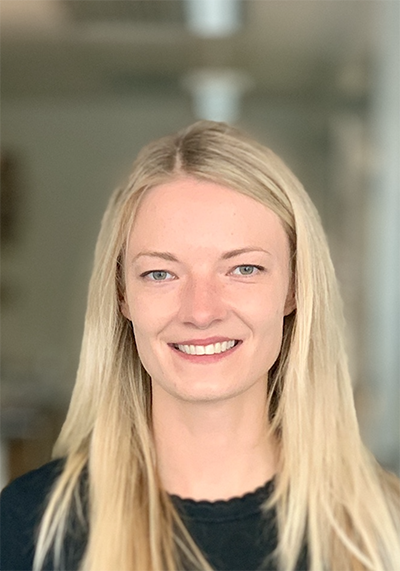
Assistant Professor, Department of Chemistry and Biochemistry and Skaggs School of Pharmacy and Pharmaceutical Sciences
Fleur Ferguson holds a joint appointment in the Department of Chemistry and Biochemistry and the Skaggs School of Pharmacy and Pharmaceutical Sciences. Her research group is developing next-generation proximity-pharmacology technology platforms. Her laboratory integrates chemical synthesis, mass spectrometry and cell biology to create therapeutic strategies for diseases where conventional approaches have failed.
Ferguson received her PhD from the University of Cambridge, advised by Professors Chris Abell and Alessio Ciulli, and completed postdoctoral research with Professor Nathanael Gray at Dana-Farber Cancer Institute. Her innovative work in chemical biology has been recognized with major awards including the NIH Director's New Innovator Award, NSF CAREER, International Chemical Biology Society Young Chemical Biologist Award, Pew Biomedical Research Scholar Award and early career honors from multiple foundations.
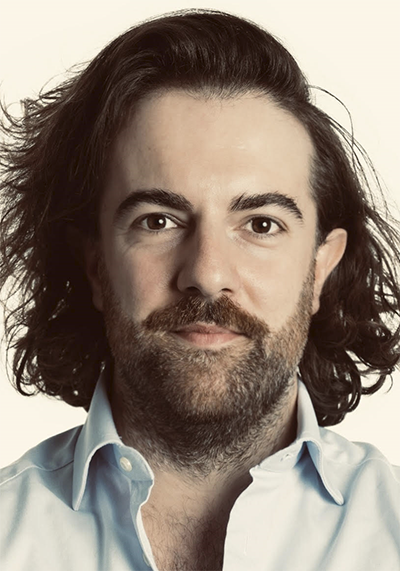
Assistant Professor, Department of Physics
Mattia Serra’s research combines data-driven mathematical methods and theoretical physics to reveal how order emerges in complex nonlinear systems. Recent work focuses on living matter, aiming to understand—and ultimately control—how early embryos self-organize their form and function.
Prior to UC San Diego, Serra was a Schmidt Science Fellow in applied mathematics at Harvard University and received his PhD in nonlinear dynamics from ETH Zürich (Switzerland), where he received the ETH Medal for outstanding doctoral thesis (2017). His honors include the Schmidt Science Fellowship (2018), Hellman Fellowship in Physics (2023), Human Frontier Science Program Early Career Research Award (2024), NSF CAREER Award (2024), NIH Maximizing Investigators’ Research Award (MIRA, 2025), and the Interdisciplinary Early Career Science Prize from the International Union of Pure and Applied Physics (2025).
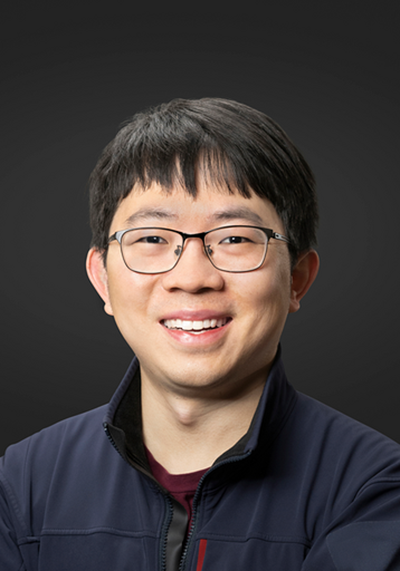
Assistant Professor, Halıcıoğlu Data Science Institute (School of Computing, Information and Data Sciences)
Hao Zhang’s work sits at the intersection of machine learning and computer systems. He is equally interested in designing strong, efficient and secure machine learning models and algorithms, and in building scalable, practical distributed systems that can support real-world machine learning workloads. Zhang’s lab is known for creating widely used open-source tools and systems, including DistServe, FastVideo, vLLM, Chatbot Arena and FastChat, which have been used by many companies and millions of users.
In recognition of his work on machine learning systems, Zhang received the inaugural 2025 Google Machine Learning and Systems Junior Faculty Award and was named one of MIT Technology Review’s 2024 Innovators Under 35 of China.
Share This:



Stay in the Know
Keep up with all the latest from UC San Diego. Subscribe to the newsletter today.
