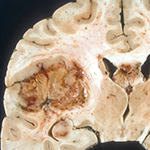
In older adults, antipsychotic drugs are commonly prescribed off-label for a number of disorders outside of their Food and Drug Administration (FDA)-approved indications – schizophrenia and bipolar disorder. In a new study, four of the antipsychotics most commonly prescribed off label for use in patients over 40 were found to lack both safety and effectiveness.
Fifteen girls from high schools around San Diego County have been meeting once a week since September to conceive, design, engineer and program a micro-experiment set to be deployed on the International Space Station (ISS) in March 2013. They are building a crystal growth experiment for a microgravity environment.
Biologists at UC San Diego have demonstrated for the first time that marine algae can be just as capable as fresh water algae in producing biofuels.
The scientists genetically engineered marine algae to produce five different kinds of industrially important enzymes and say the same process they used could be employed to enhance the yield of petroleum-like compounds from these salt water algae.
The number of Ph.D. students participating in the Center of Interdisciplinary Science for Art, Architecture and Archaeology (CISA3) has risen in the past year from six to 19, thanks to support from private donors and from the National Science Foundation through the ramp-up of its Integrative Graduate Education and Research Traineeship (IGERT) grant to the UC San Diego center’s for engineering in cultural heritage diagnostics.
In a new study, researchers at the University of California, San Diego School of Medicine, with colleagues elsewhere, describe markers and a model that quantify how aging occurs at the level of genes and molecules, providing not just a more precise way to determine how old someone is, but also perhaps anticipate or treat ailments and diseases that come with the passage of time.
Simulations that help doctors perform life-saving surgeries; a better way to model climate in urban areas; and optimized blood flow patterns for heart patients with pacemakers. Fluid dynamics researchers from the University of California, San Diego, are discussing their research on these topics—and many others—at the 65th Annual Meeting of the American Physical Society’s Division of Fluid Dynamics here in San Diego Nov. 18 to 20. With about 2,300 contributed presentations, the APS/DFD annual conference is the largest scientific meeting of researchers in fluid dynamics.