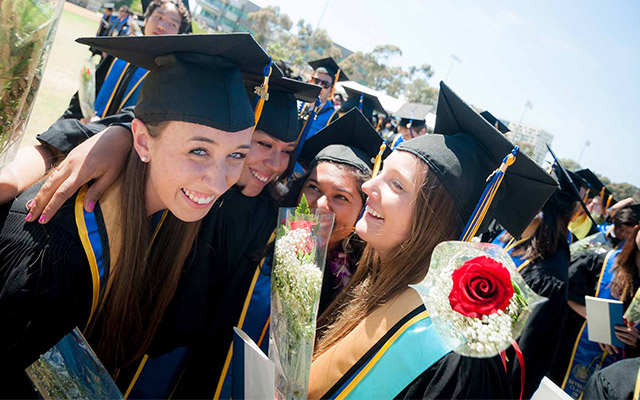
Both Patricia Campbell and Christy Rodriguez began their UC San Diego academic careers in 1967 as part of Muir College’s first undergraduate class. After years of developing their careers and taking care of their families, the two, coincidentally, will be among the 7,045 graduating students participating in campus’s commencement ceremonies June 14-16.
Nearly 3,000 alumni, faculty, staff, students and community members returned to UC San Diego Saturday for the Triton 5K. They joined together to walk, run, volunteer and celebrate all things UC San Diego. The university’s race was part of the annual Alumni Weekend hosted June 5 through 8 by UCSD Alumni. This year, the event raised more than $270,000 for student scholarships, bringing the total amount raised to support undergraduates to $3.9 million since the 5K was established in 1996.
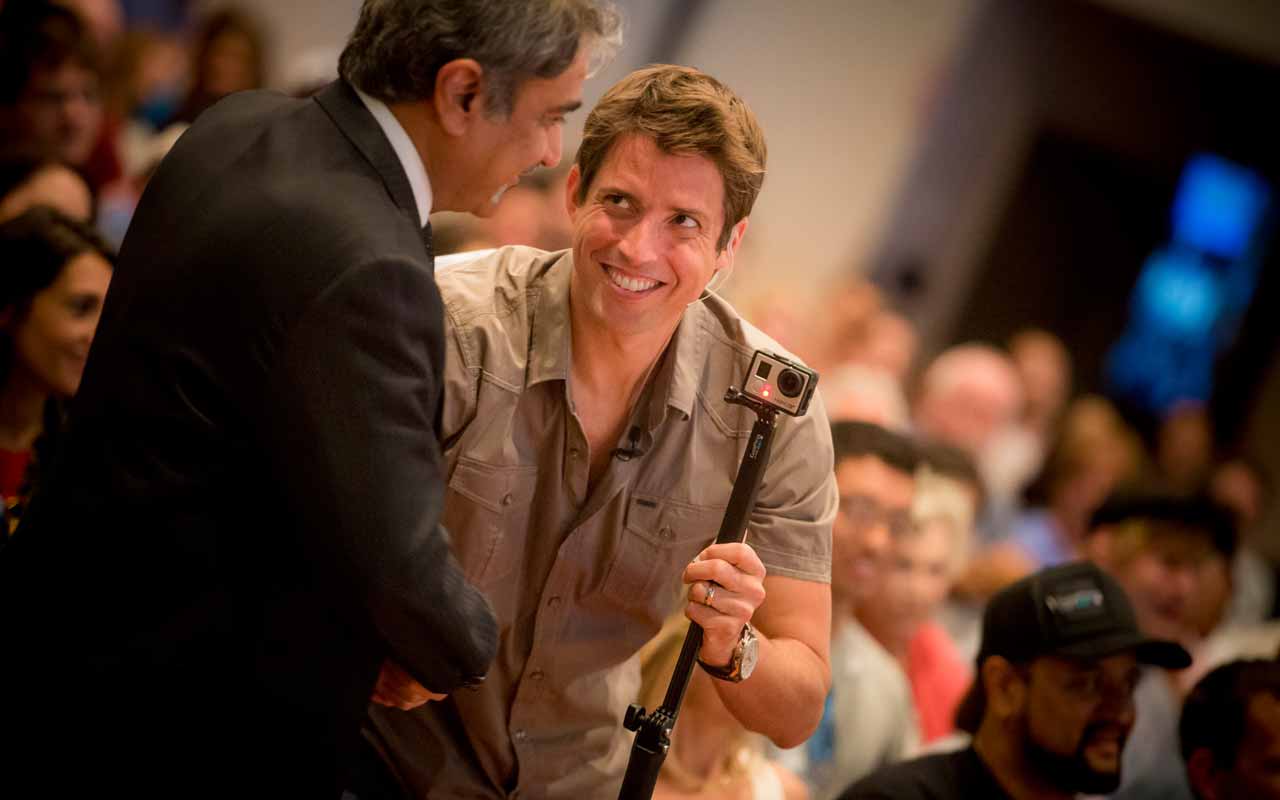
Nick Woodman, Muir ’97, entered the Price Center West ballroom to a roaring crowd, flanked by his wife, Jill, and his friends Neil Dana and Justin Wilkenfeld. He met all of them at UC San Diego, and, today, they all double as his colleagues at GoPro — the wildly successful camera company born from his love of surfing.
From lab coats and Bunsen burners to carpet in a cubicle, it’s no surprise that a billion dollar research university like UC San Diego requires a range of goods and services to keep everything running smoothly. What might surprise you is how many of the businesses working with such a large public institution are small and diverse suppliers.
When Cesar Figueroa, assistant resident dean at Warren College, learned that students at Bayside Elementary lacked basic classroom supplies, he decided to take action. An underserved school located in Imperial Beach, the majority of Bayside students come from low-income families and many qualify for free or reduced lunch. Determined to make their lives better, Figueroa has recruited UC San Diego students and staff to join in revitalization efforts as volunteers and mentors and has cultivated community partnerships to garner resources for the school.
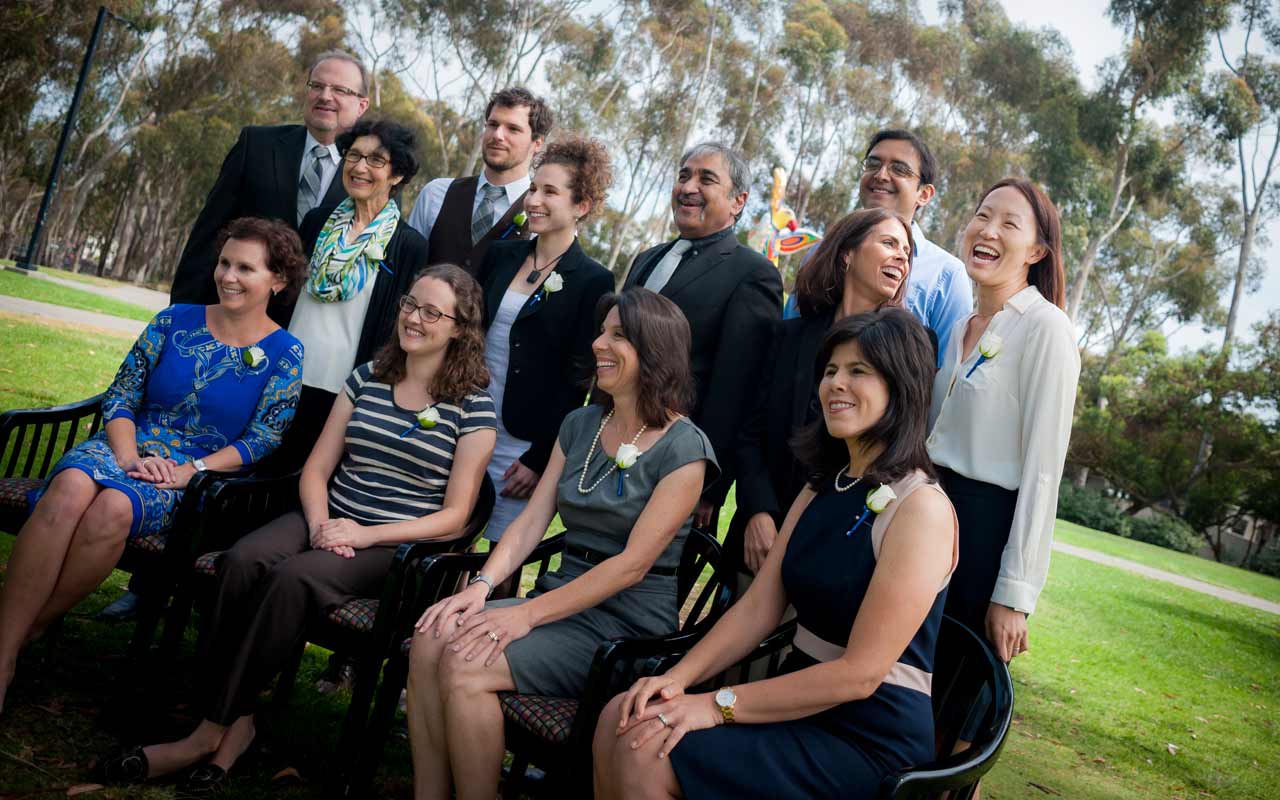
After a well-attended and sun-lit reception al fresco, UC San Diego’s Academic Senate presented the 2014 Distinguished Teaching Awards to 12 campus scholars in a formal ceremony. Chancellor Pradeep K. Khosla and Academic Assembly Chair Kit Pogliano were featured speakers for the event, held May 27 in the Ida and Cecil Green Faculty Club.