Scripps Institution of Oceanography at UC San Diego climate and atmospheric scientist V. Ramanathan will discuss his perspective as a council member of the Pontifical Academy of Sciences on the transformational role religious leaders can play to bring awareness to the urgency of climate change to protect people and nature. Ramanathan will discuss his view on religion and climate change during the American Geophysical Union (AGU) 2015 Fall Meeting.
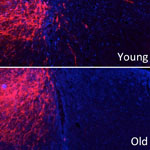
Further underscoring the prenatal origins of Autism Spectrum Disorder (ASD), researchers at University of California, San Diego School of Medicine describe for the first time how abnormal gene activity in cell cycle networks that are known to control brain cell production may underlie abnormal early brain growth in the disorder.
Electrical engineers at the University of California, San Diego developed a receiver that can detect a weak, fast, randomly occurring signal. The study lays the groundwork for a new class of highly sensitive communication receivers and scientific instruments that can extract faint, non-repetitive signals from noise. The advance has applications in secure communication, electronic warfare, signal intelligence, remote sensing, astronomy and spectroscopy.
Researchers and students from UC San Diego's CISA3 presented a wide range of work at the annual Digital Heritage Conference in Granada, Spain, one of the top events worldwide for cultural heritage engineering.
Patients seeking rapid but safe weight loss have a new option at the Bariatric Metabolic Institute (BMI) at UC San Diego Health. During an outpatient procedure, surgeons place an adjustable saline balloon in the stomach. The volume and shape of the balloon take up space in the stomach, which encourages food portion control. The device, called Orbera, has been shown to reduce total body weight by 10 percent.
Five years ago, there were no computer science classes offered by schools within San Diego’s Sweetwater Union School District. Today, Sweetwater High School has a number of such classes, several of them Advanced Placement classes that encourage students to continue their education. That progress earned teacher Arthur Lopez, among others, and student Karla Gonzalez an invitation to meet with White House and National Science Foundation officials late last week.