STEM Career v. Parenting?
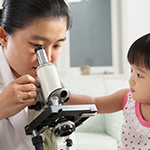
Researchers found that between four to seven years of the birth or adoption of their first child, 43 percent of women, and 23 percent of men, left their full-time STEM careers.
Researchers found that between four to seven years of the birth or adoption of their first child, 43 percent of women, and 23 percent of men, left their full-time STEM careers.
The Next Generation Precision Oncology Symposium, a novel meeting of industry and academic leaders in cancer science and medicine, will be held February 21, 2019 at UC San Diego Moores Cancer Center.
A new art exhibition coming to the Qualcomm Institute’s gallery@calit2 on Thursday, March 7th showcases environmentally-informed artistic engagements with the intersection of vertical and horizontal planes.
Researchers at UC San Diego School of Medicine report that persons with schizophrenia scored lower on a wisdom assessment than non-psychiatric comparison participants, but that there was considerable variability in levels of wisdom, and those with higher scores displayed fewer psychotic symptoms.
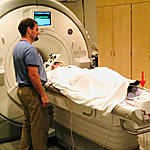
In a randomized, controlled pilot trial published February 13, 2019 in PLOS ONE, UC San Diego School of Medicine researchers found that participants pre-treated with noninvasive vagus nerve stimulation experienced less pain after heat stimulus than mock-treated participants.
By examining how mammary cells respond in a stiffness-changing hydrogel, researchers discovered that several pathways work together to signal breast cells to turn cancerous. The work could inspire new approaches to treating patients and inhibiting tumor growth.
Keep up with all the latest from UC San Diego. Subscribe to the newsletter today.