The National Science Foundation has awarded $2.8 million to the University of California San Diego to construct a replica ocean-atmosphere system on the Scripps Institution of Oceanography campus. The new Scripps Ocean Atmosphere Research Simulator will mimic the ocean with unprecedented accuracy, capturing the interactions of wind, waves, microbial marine life, and chemistry at the sea surface in a laboratory setting.
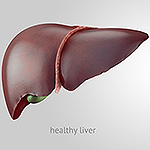
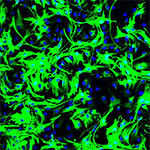
Chronic inflammation is known to drive many cancers, especially liver cancer. Researchers have long thought that’s because inflammation directly affects cancer cells, stimulating their division and protecting them from cell death. But University of California San Diego School of Medicine researchers have now found that chronic liver inflammation also promotes cancer by suppressing immunosurveillance — a natural defense mechanism in which it’s thought the immune system suppresses cancer development.
Researchers at the University of California San Diego studying how animals respond to infections have found a new pathway that may help in tolerating stressors that damage proteins. Naming the pathway the Intracellular Pathogen Response, or “IPR,” the scientists say it is a newly discovered way for animals to cope with certain types of stress and attacks, including heat shock.
The five University of California medical centers, including Moores Cancer Center at UC San Diego Health, have joined together to recruit 100,000 women in California to be part of WISDOM: a clinical trial to uncover whether annual mammograms are the best way to screen for breast cancer, or whether a more personalized approach could deliver better results.
A team of scientists at the University of California San Diego has now helped decipher the dynamics that control how our cells age, and with it implications for extending human longevity. As described in a study published in Proceedings of the National Academy of Sciences, a group led by biologist Nan Hao employed a combination of technologies in engineering, computer science and biology to analyze molecular processes that influence aging.
UC San Diego’s oldest living alumnus, Walter Munk, capped a weeklong celebration of his 100th birthday with an event fit for a prince. His Serene Highness (H.S.H.) Prince Albert II of Monaco returned to UC San Diego on Oct. 26 to join the renowned oceanographer in a Centennial Conversation where the two discussed their shared passion for ocean exploration, the importance of investing in scientific research, and hope for collaborating to solve climate change in the future.