The RCSB Protein Data Bank (PDB), which recently archived its 100,000th molecule structure, has introduced a free mobile application device that enables users from the general public and expert researchers to quickly search and visualize the 3D shapes of proteins, nucleic acids, and molecular machines.
Researchers at University of California, San Diego School of Medicine have discovered that T-cells – a type of white blood cell that learns to recognize and attack microbial pathogens – are activated by a pain receptor.
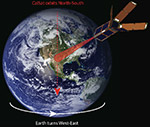
With mobile devices in every back pocket and lab coat, it’s a given that patients and their physicians need not be in the same room to interact. But a proof-of-concept demonstration at the University of California, San Diego this week showed that with the right network and visualization technologies, patients need not even be in the same time zone as their physicians in order to obtain a face-to-face medical opinion.
Researchers at the San Diego Supercomputer Center (SDSC) at the University of California, San Diego have received a three-year, $1.3 million award from the National Science Foundation (NSF) to develop a web-based resource that lets scientists seamlessly share and access preliminary results and transient data from research on a variety of platforms, including mobile devices.
Researchers at University of California, San Diego School of Medicine are co-recipients of a $4.1-million grant from the National Institutes of Health to advance treatments for type 1 diabetes. Using human stem cells, the team plans to culture bits of human pancreas in a dish and, using microfluidics, mimic blood flow through the islet.
Engineers at the University of California, San Diego, have completed the first comprehensive numerical simulation of skeletal muscle tissue using a method that uses the pixels in an image as data points for the computer simulation—a method known as mesh-free simulation.