Industry leaders and data professionals from throughout the world will convene March 8-11 in San Diego for the Research Data Alliance’s (RDA) Fifth Plenary Meeting to discuss ways to foster an open environment of data sharing and exchange.
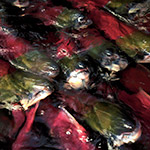
A powerful method for analyzing and predicting nature’s dynamic and interconnected systems is now providing new forecasting and management tools for Canada’s premier fishery.
A new simple tool developed by nanoengineers at the University of California, San Diego, is opening the door to an era when anyone will be able to build sensors, anywhere, including physicians in the clinic, patients in their home and soldiers in the field. The team from the University of California, San Diego, developed high-tech bio-inks that react with several chemicals, including glucose. They filled off-the-shelf ballpoint pens with the inks and were able to draw sensors to measure glucose directly on the skin and sensors to measure pollution on leaves.
The Movement Disorder Center at UC San Diego Health System has been designated the 41st Center of Excellence in the National Parkinson Foundation’s (NPF) global network. This designation is the highest recognition offered by NPF to a Parkinson’s specialty clinic. It represents the consensus of leaders in the field that the UC San Diego program is among the world’s leading centers for Parkinson’s research, outreach and care.
A Scripps Institution of Oceanography-led study on how natural and man-made sources of nitrogen are recycled through the Lake Tahoe ecosystem provides new information on how global change may affect the iconic blue lake.
Feb 24, 2015 San Diego, CA: Professors leading four new research centers at the University of California, San Diego Jacobs School of Engineering will speak at Research Expo on April 16, 2015. The faculty talks will focus on cutting-edge research in wearable sensors, extreme events research, sustainable power and energy, and visual computing. Learn more about the agile research centers project here.