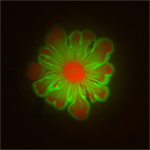
UC San Diego Cancer Scientists Identify New Drug Target for Multiple Tumor Types
A dysfunctional enzyme involved in building cancer cell membranes helps fuel tumor growth; when it’s disabled or depleted in mouse models, tumors shrank significantly.
The UC San Diego Library is embarking on a new effort with the Texas Digital Library to co-create a blueprint for the first nationally Distributed Digital Preservation service for private and sensitive data.
NJIT Mechanical and Industrial Engineering Professor Dibakar Datta and his team used the Comet supercomputer at the San Diego Supercomputer Center to create simulations of graphene-water interactions to see if graphene is a good candidate for delivering medicine to specific parts of the body.
Scientists may come one step closer to understanding the conditions of the universe moments after its inception, thanks to a future commitment of $20 million made by the Simons Foundation.
UC San Diego will launch a payload of stem cell-derived human brain organoids to the International Space Station. Researchers will document how these “mini brains” organize into the beginnings of a functional brain with implications for the future of human life in space.
Bladder cancer, one of the most common cancers in the U.S., may be soon helped by a novel non-invasive diagnostic method thanks to machine learning research by researchers at UC San Diego's San Diego Supercomputer Center and Moores Cancer Center.
Keep up with all the latest from UC San Diego. Subscribe to the newsletter today.
You have been successfully subscribed to the UC San Diego Today Newsletter.