Un-junking Junk DNA
A study led by researchers at the University of California, San Diego School of Medicine shines a new light on molecular tools our cells use to govern regulated gene expression.
A study led by researchers at the University of California, San Diego School of Medicine shines a new light on molecular tools our cells use to govern regulated gene expression.
A team of scientists led by researchers from the University of California, San Diego School of Medicine and Ludwig Institute for Cancer Research have identified a novel therapeutic approach for the most frequent genetic cause of ALS, a disorder of the regions of the brain and spinal cord that control voluntary muscle movement, and frontotemporal degeneration, the second most frequent dementia.
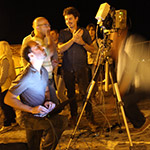
An interdisciplinary team of Ph.D. students from the University of California, San Diego, recently spent time at archaeological sites in the southern Italian region of Calabria, and they came away with a newfound respect for the daily routine of uncovering the past – and a better understanding of how to safeguard archaeological sites and artifacts for the future.
He is the first professor from the University of California, San Diego to win the prestigious SIGOPS Mark Weiser Award. On Nov. 5, computer science and engineering professor Stefan Savage received the 2013 award from the ACM Special Interest Group on Operating Systems (SIGOPS) during the Symposium on Operating Systems Principles (SOSP) in Farmington, PA.
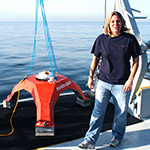
Mesmerized by the movement of water as a child—from the ocean to waves and floods—Timu Gallien has transformed her childhood curiosities into full-time research as one of UC San Diego’s newest Chancellor’s Postdoctoral Fellows at Scripps Institution of Oceanography. Serving as a role model for women in STEM fields (Science, Technology, Engineering and Mathematics), Gallien studies coastal flood risks, sea level rises and the effects of urbanization in order to create awareness about the potential consequences of climate change.
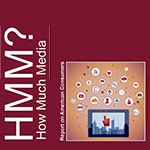
A new study by a researcher at the San Diego Supercomputer Center (SDSC) at the University of California, San Diego, says that by 2015, the sum of media asked for and delivered to consumers on mobile devices and to their homes would take more than 15 hours a day to see or hear. That volume is equal to 6.9 million-million gigabytes of information, or a daily consumption of nine DVDs worth of data per person per day.
Keep up with all the latest from UC San Diego. Subscribe to the newsletter today.