Scientists at University of California, San Diego School of Medicine and Sanford-Burnham Medical Research Institute have shown that by encapsulating immature pancreatic cells derived from human embryonic stem cells, and implanting them under the skin of diabetic mouse models, sufficient insulin is produced to maintain glucose levels without unwanted potential trade-offs of the technology.
César E. Chávez, civil rights advocate, labor leader and proponent of nonviolent activism, is the center of a series of celebratory events at the University of California, San Diego throughout the months of April and May. The events will include the performance of a one man show on Chávez, a presentation on the historic United Farm Workers (UFW) march to Sacramento in 1966, the celebration of the 44th anniversary of Chicano Park and more.
Researchers at the University of California, San Diego School of Medicine and Moores Cancer Center report that bariatric surgery resulting in dramatic weight loss in formerly severely obese women reduces the risk of endometrial (uterine) cancer by 71 percent and as much as 81 percent if normal weight is maintained after surgery.
A recent whole-genome sequencing (WGS) analysis project supported by the San Diego Supercomputer Center (SDSC) at the University of California, San Diego has demonstrated the effectiveness of innovative applications of “flash” memory technology to rapidly process large data sets that are pervasive throughout human genomics research.
Two new studies involving Scripps Institution of Oceanography, UC San Diego researchers project that human influences will lead to a drier world as the 21st century progresses and offer an explanation of the mechanics behind the drying trend.
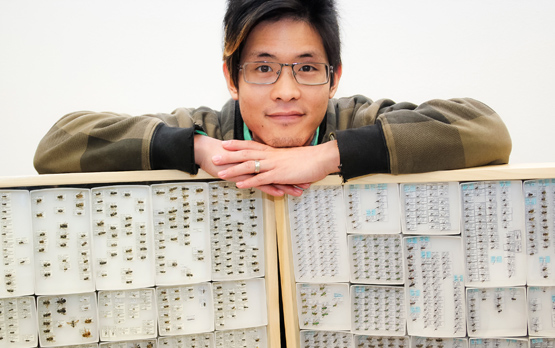
James Hung has collected more than 17,000 wild bees from coastal, desert and mountain areas of San Diego County. But many of his specimens bear little resemblance to the honey bees we normally think of as bees. To the casual observer, his bee collection looks more like a menagerie of Insects Gone Wild—gnat-sized bugs with long snouts, gigantic black bees and curious iridescent creatures with termite-like wings.