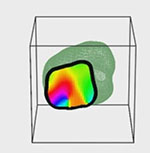
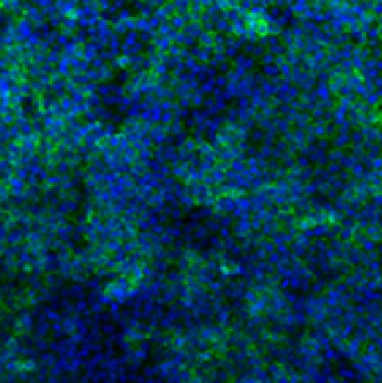
Led by researchers at University of California San Diego School of Medicine, a diverse team of neuroscientists and surgeons successfully grafted human neural progenitor cells into rhesus monkeys with spinal cord injuries. The grafts not only survived, but grew hundreds of thousands of human axons and synapses, resulting in improved forelimb function in the monkeys.
The University of California San Diego Department of Music is well known for its emphasis on experimental music and sound in composition, performance and scholarship, and brings this to the forefront at a special two-day conference March 2-3. “Sonic Fluidities: An Interdisciplinary Graduate Conference” is the first of its kind at UC San Diego, organized by a committee of current Integrative Studies program students. Through presentations, performances and installations, the inaugural conference uses the metaphor of fluidity to explore the social position of sound and music through time and genre.
Using artificial intelligence and machine learning techniques, researchers at Shiley Eye Institute at UC San Diego Health and University of California San Diego School of Medicine, with colleagues in China, Germany and Texas, have developed a new computational tool to screen patients with common but blinding retinal diseases, potentially speeding diagnoses and treatment.
UC San Diego Health now offers patients with epilepsy another non-pharmacological way to treat seizures. For the more than one million individuals who live with uncontrolled seizures despite taking medications, UC San Diego Health recently began offering the first and only FDA-approved brain-responsive neurostimulation (RNS) system designed for the treatment of refractory epilepsy.
Computers have helped researchers develop a new phosphor that can make LEDs cheaper and render colors more accurately. An international team led by engineers at UC San Diego first predicted the new phosphor using supercomputers and data mining algorithms, then developed a simple recipe to make it in the lab. Unlike many phosphors, this one is made of inexpensive, earth-abundant elements and can easily be made using industrial methods. As computers predicted, the new phosphor performed well in tests and in LED prototypes.