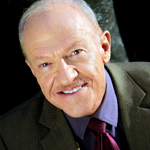
Wayne Cornelius first fell in love with Mexico in 1962 as a small-town Pennsylvania high schooler. It was his first trip abroad (first time west of the Mississippi, actually), and he “got hooked,” he says, on the country, its people, history, food and music. Now, the social scientist who founded UC San Diego’s Center for Comparative Immigration Studies, as well as Center for U.S-Mexican Studies, has been honored with Mexico’s highest award for foreigners: the Order of the Aztec Eagle.
Want to cut through the clutter of partisan chatter? California’s primary election is nearly here. And, as usual, the political season has swept in with masses of mailers and contradictory commercials. The barrage, instead of informing voters about the statewide initiatives on the ballot, can easily leave them overwhelmed and confused.
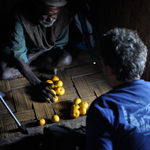
Time lines and number lines —so familiar, so basic, they’re taken for granted. But if you think that the way you think about these fundamental concepts is hardwired, you might want to think again, says UC San Diego cognitive scientist Rafael Núñez.
China’s economy is growing rapidly, but Chinese currency has yet to join the ranks of the U.S. dollar, euro, yen and sterling pound to become a global reserve currency. Three prominent keynote speakers and many distinguished economists, bankers and business people will give their views on the internationalization of Chinese currency (renminbi or RMB) at the University of California, San Diego June 7 to 8.
Tape measures. Rulers. Graphs. The gas gauge in your car, and the icon on your favorite digital device showing battery power. The number line and its cousins – notations that map numbers onto space and often represent magnitude – are everywhere. Most adults in industrialized societies are so fluent at using the concept, we hardly think about it. We don’t stop to wonder: Is it “natural”? Is it cultural?
The University of California, San Diego and the Arthur C. Clarke Foundation have agreed to establish the Arthur C. Clarke Center for Human Imagination (ACCCHI) at UC San Diego. The agreement was signed in conjunction with the foundation’s annual international Clarke Awards held on April 12 in Washington, D.C.