The arts and humanities will have a stronger and more influential presence on the University of California San Diego campus, thanks to a new $750,000 grant from the National Endowment for the Humanities. The three-year, matching grant is the largest single award ever received by the university’s Division of Arts and Humanities from the NEH.
To understand why some patients with appendix cancer respond to standard treatment while others do not, University of California San Diego School of Medicine and Moores Cancer Center researchers, in collaboration with Foundation Medicine, performed genetic profiling on 703 appendiceal tumors — the largest such study of this disease to date — to compare mutations present in both cancer types.
Now in its 25th year, the annual Luau and Legends of Surf Invitational unites more than 500 surfers, scientists and cancer survivors who share two great passions: surfing and finding a cure for cancer. All proceeds from the public event, which has raised over $8 million since it was launched in 1993, go to support research, teaching and clinical programs at Moores Cancer Center—the only National Cancer Institute-designated Comprehensive Cancer Center in our region, and one of only 49 in the U.S.
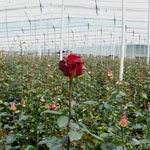
Injecting particles into the atmosphere to cool the planet and counter the warming effects of climate change would do nothing to offset the crop damage from rising global temperatures, according to a new analysis by the University of California, Berkeley, Stanford and Columbia Universities, as well as the University of California San Diego’s School of Global Policy and Strategy.
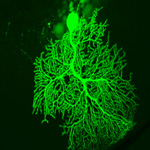
Researchers at University of California San Diego School of Medicine report that they have successfully created spinal cord neural stem cells (NSCs) from human pluripotent stem cells (hPSCs) that differentiate into a diverse population of cells capable of dispersing throughout the spinal cord and can be maintained for long periods of time.
Early Earth was a hot, gaseous, dusty and dynamic planet with an atmosphere and an ocean. Then its surface cooled and stabilized enough for clouds, landmasses and early life to form about four billion years ago, during what’s called the isotopic age of rocks, or the Archean Period. Atmospheric chemical byproducts from that time traveled through the air and deposited inside the planet’s oldest rock, recording life’s earliest activities like photosynthesis and oxygen production.
Sulfur isotopes can serve as tracers of atmospheric oxygen and new data collected from the present-day atmosphere in China by an international team of researchers, led by the University of California San Diego, indicate remarkable similarity to the isotopic footprint found in ancient rocks. This opens up new interpretations of the Archean Period’s sulfur isotope sedimentary signature—a proxy for the origins and evolution of atmospheric oxygen and early life on Earth.