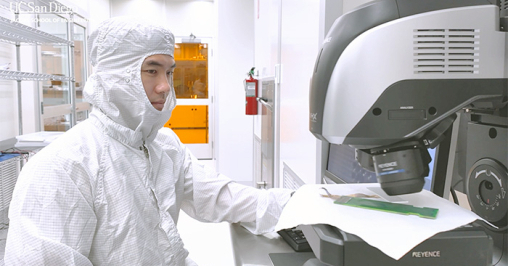


Sensors built with a new manufacturing approach are capable of recording activity deep within the brain from large populations of individual neurons–with a resolution of as few as one or two neurons–in humans as well as a range of animal models.
Advanced research and leading-edge tracing technology show infection prevention safety measures were effective in stopping viral spread at UC San Diego Health.
Rommie Amaro, professor of molecular biology at UC San Diego, and her team use computers to investigate biological systems. Last year, their atomic-level computational model of the H1N1 influenza virus revealed vulnerabilities that could lead to more effective and longer-lasting flu vaccines.
Using CRISPR technology, UC San Diego scientists have engineered a new way to genetically suppress populations of Anopheles gambiae, the mosquitoes that primarily spread malaria in Africa and contribute to economic poverty in affected regions.