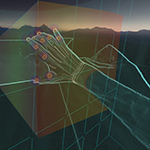
UC San Diego researchers are using a Chancellor’s Interdisciplinary Collaboratories Fellowship to explore Augmented Reality. Department of Visual Arts Professor Sheldon Brown and M.F.A. candidate Jon Paden are partnering with scholars in the departments of Neuroscience, Computer Science and Engineering, Electrical and Computer Engineering, and NanoEngineering on a project entitled, “Tromper soi-même: Fooling the senses with new techniques of combined visual and afferent Augmented Reality rendering of sight and touch.”
Through an initiative called “KNIT,” the University of California San Diego’s Division of Arts and Humanities is crafting collaboration and community on campus — digitally. By offering online tools collectively referred to as a “digital commons,” KNIT will enable university faculty, students and staff to customize websites for courses; research projects or personal academic portfolios; create or join public and private discussion groups devoted to shared interests; and network with communities both on and off campus. In addition to the KNIT online resource, the division has launched a Digital Arts & Humanities website, featuring initiatives of the Institute of Arts & Humanities (IAH) and related projects and resources on campus.
The Health Cyberinfrastructure (CI) Division of the San Diego Supercomputer Center (SDSC) at the University of California San Diego, has deployed its secure and compliant Cloud solution, Sherlock Cloud, in Amazon Web Services (AWS).
The University of California San Diego’s footprint is growing. This summer it extends to Canada’s Banff Centre for Arts and Creativity where Steven Schick looms large. The distinguished professor of music, Reed Family Presidential Chair holder, and music director and conductor of La Jolla Symphony and Chorus is serving as co-artistic director of Banff Centre’s 2017 Summer Classical Music Series. In the role, Schick, along with flautist Claire Chase, is creating programming under the theme of “Create, Refine, Amplify” that features a strong focus on chamber music plus new approaches to help develop classical musicians’ skills and careers. The program attracts hundreds of individual participants, established groups and renowned composers from around the world.
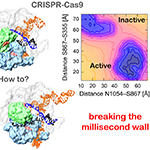
Using a novel molecular dynamics method capable of capturing the motion of gyrating proteins at time intervals up to one thousand times greater than previous efforts, a team led by UC San Diego researchers has identified, for the first time, the myriad structural changes that activate and drive CRISPR-Cas9, the innovative gene-splicing technology that’s transforming the field of genetic engineering. SDSC’s ‘Comet’ supercomputer was used to helps break the “millisecond barrier” for complex biological simulations.
If not included, the first paragraph from release will be used):
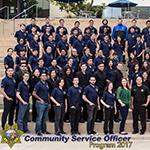
UC San Diego Police Sergeant Manuel “Nel” Garcia and his wife, Leah, were recently commended by Mothers Against Drunk Driving (MADD) San Diego County for their volunteer work over the past three years. The couple was recognized for their continued efforts to garner support for the organization by recruiting volunteers from UC San Diego’s Community Service Officer (CSO) program, and by promoting awareness of driving under the influence within UC San Diego communities such as Greek Life on Campus.