UC San Diego Health has been selected by Centers for Medicare & Medicaid Services (CMS) as one of 561 Accountable Care Organizations (ACOs), ensuring as many as 10.5 million Medicare beneficiaries across the United States have access to high-quality, coordinated care.
In approximately 15 percent of cases where couples are unable to conceive, the underlying cause of infertility is not known. Researchers at University of California San Diego School of Medicine and in the Division of Biological Sciences at UC San Diego have identified a protein in mice that must be present in eggs for them to complete normal development. Without the protein, called ZFP36L2, the eggs appear ordinary, but they cannot be fertilized by sperm.
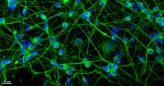
In both cell cultures and mouse models, a drug used to treat Hepatitis C effectively protected and rescued neural cells infected by the Zika virus — and blocked transmission of the virus to mouse fetuses. Researchers at University of California San Diego School of Medicine, with colleagues in Brazil and elsewhere, say their findings support further investigation of using the repurposed drug as a potential treatment for Zika-infected adults, including pregnant women.
1968 was an unforgettable year. North Vietnam launched the Tet Offensive. Richard Nixon was elected president. The Beatles released the White Album. Martin Luther King, Jr. was assassinated. Upon hearing the news a few hours later, just as he was about to give a scheduled speech, Sen. Robert F. Kennedy responded with a powerful extemporaneous eulogy in which he called upon those who would "tame the savageness of man and make gentle the life of this world."
After a national search, Alexander Khalessi, MD, has been named chair of the Department of Neurosurgery at UC San Diego Health and chief of the Division of Neurosurgery in the Department of Surgery at University of California San Diego School of Medicine.
In a paper publishing January 24 in the journal International Psychogeriatrics, researchers at the University of California San Diego School of Medicine asked 21 hospice patients, ages 58 to 97 and in the last six months of their lives, to describe the core characteristics of wisdom and whether their terminal illnesses had changed or impacted their understanding of wisdom.