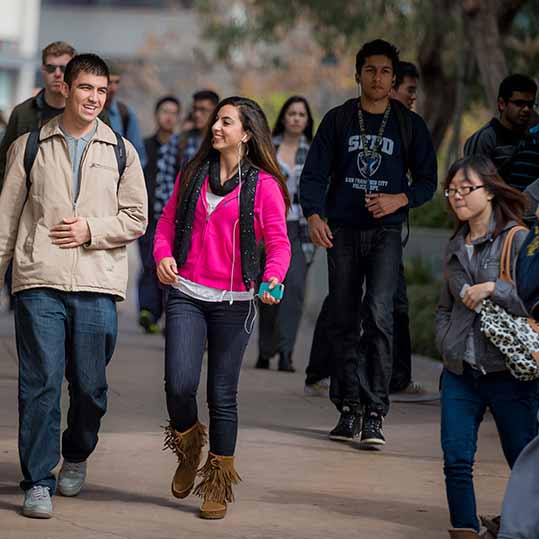
We do the science of society. With 16 departments and programs, the School of Social Sciences pushes boundaries to advance research, teaching and public impact.
Three UC San Diego researchers say they can predict the spread of flu a week into the future with as much accuracy as Google Flu Trends can display levels of infection right now.
Is an experienced policymaker a more rational and a more self-interested bargainer than the average person? That is what nearly all prior research has assumed. But a new study from the University of California, San Diego shows just the opposite.
The Assyrian Empire once dominated the ancient Near East. At the start of the 7th century BC, it was a mighty military machine and the largest empire the Old World had yet seen. But then, before the century was out, it had collapsed. Why? An international study now offers two new factors as possible contributors to the empire’s sudden demise – overpopulation and drought.
As climate instability increases across the planet, limiting global surface air temperature increase above pre-industrial levels to an average of 2° C (3.6° F) has become a popular metric for success in the public eye.
In a paper published this week online in Global Society, researchers with University of California, San Diego School of Medicine and the Urban Studies and Planning Program, also at UC San Diego, present a bioregional guide that merges place-based (territorial) city planning and ecosystem management along the United States-Mexico border as way to improve human and environmental health.
Admiral Samuel Locklear, Commander of U.S. Pacific Command, recently visited the UC San Diego campus where he held discussions with faculty on topics ranging from international relations to global warming.