We do the science of society. With 16 departments and programs, the School of Social Sciences pushes boundaries to advance research, teaching and public impact.
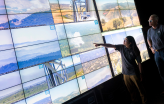
Virtual reality has become a lightning rod, with opinions split on the substance and relevance of its future applications. UC San Diego’s recent “Future of Virtual Reality” conference demonstrated that this technology has far-reaching potential—not only in the realm of gaming, but in fields like archaeology and medicine as well.
The University of California, San Diego has been named the 11th most ethnically diverse college in the nation, according to a new report. Best College Reviews, a ranking service for American colleges and universities, recently released a list of the top 50 ethnically diverse schools ...
Those who attended this year’s recent Postdoc Research Symposium and Postdoc Appreciation Lunch and Awards Ceremony sampled research projects from 25 different departments, and desert at the crowded Appreciation Lunch took the form of well-deserved awards.
Why do babies smile when they interact with their parents? Could their smiles have a purpose? In the Sept. 23 issue of PLOS ONE, a team of computer scientists, roboticists and developmental psychologists confirm what most parents already suspect: when babies smile, they do so with a purpose—to make the person they interact with smile in return.
The theme for the University of California, San Diego’s 10th annual California Native American Day celebration is “Unsettled Stories: Reclaiming This Land,” and will include a kickoff event Sept. 25 as well as an undergraduate research symposium, a Native American film festival, spoken word performances, a powwow and more throughout the 2015-16 academic year.
Two University of California, San Diego-sponsored events in September, over two consecutive Saturdays, highlight the importance of a comprehensive approach to brain research. First, on Sept. 12, is an education and advocacy forum for the public bringing together those affected by Alzheimer's disease, Parkinson's disease, brain injury, stroke, epilepsy, autism, mental illness or depression. Then on Sept. 19 a research symposium will connect local “neurotechnology” innovators to one another and to the region’s business community.