Chemists Create Modular System for Placing Proteins on Membranes
With a tag, an anchor and a cage that can be unlocked with light, chemists have devised a simple, modular system that can locate proteins at the membrane of a cell.
Astronomy & Astrophysics, Chemistry & Biochemistry, Physics, and Mathematics
With a tag, an anchor and a cage that can be unlocked with light, chemists have devised a simple, modular system that can locate proteins at the membrane of a cell.
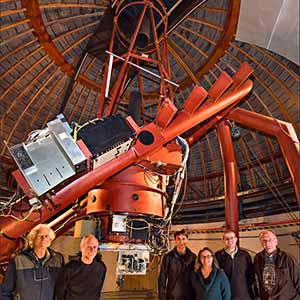
Astronomers have expanded the search for extraterrestrial intelligence into a new realm with detectors tuned to infrared light. Their new instrument has just begun to scour the sky for messages from other worlds.
Nearly every cell in our bodies carries the same genetic code. Yet different types of cells read the same DNA in widely different ways, influenced by chemical chemical tags that modify the genetic material without changing the underlying DNA sequence. Scientists today announced significant progress in the unraveling of the code that guides those differences, a body of information they call the epigenome.
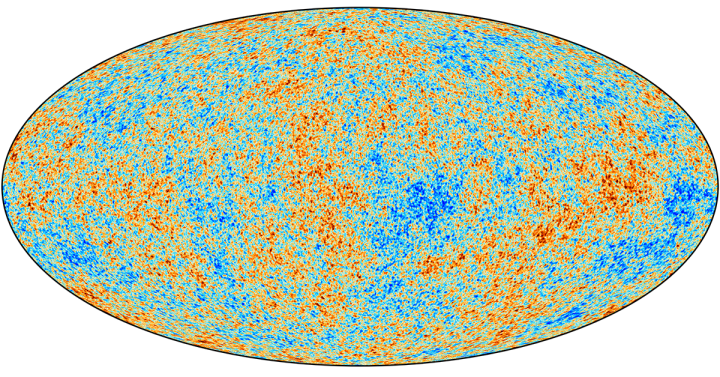
Two UC San Diego astrophysicists together with a colleague at Columbia University have been awarded a 2014 Buchalter Cosmology Prize for a paper proposing a way to significantly enhance cosmological measurements in a way that should enable sensitive tests of ideas fundamental to our understanding of physical laws. The paper by postdoctoral scholar Jonathan Kaufman, physics professor Brian Keating, and Bradley Johnson, professor of physics at Columbia, was posted to the online repository arXiv in September 2014.
When a rapidly-growing cell divides into two smaller cells, what triggers the split? Is it the size the growing cell eventually reaches? Or is the real trigger the time period over which the cell keeps growing ever larger? A novel study published online today in the journal Current Biology has finally provided an answer to this long unsolved conundrum. And it’s not what many biologists expected.
A new analysis of a Martian rock that meteorite hunters plucked from an Antarctic ice field 30 years ago this month reveals a record of the planet's climate billions of years ago, back when water likely washed across its surface and any life that ever formed there might have emerged.
Discover Magazine, September 29
KPBS, August 11
Smithsonian Magazine, August 5
Keep up with all the latest from UC San Diego. Subscribe to the newsletter today.