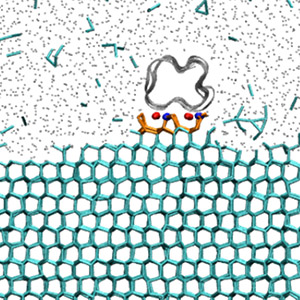
Many insects and animals have special proteins that act like car antifreeze to prevent ice from forming and spreading in their bodies amidst harsh winter temperatures. Scientists know about these antifreeze proteins (AFPs), but not so much about the mechanisms that make them work. Chemistry researchers at the University of California San Diego and the University of Utah, however, share new cold facts about AFP function in their July 9 article published in the Proceedings of the National Academy of Sciences (PNAS). Their research results could impact a variety of industrial and natural processes, including cloud formation, as well as future scientific studies.
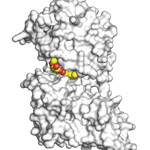
Through x-ray crystallography and kinase-inhibitor specificity profiling, University of California San Diego School of Medicine researchers, in collaboration with researchers at Peking University and Zhejiang University, reveal that curcumin, a natural occurring chemical compound found in the spice turmeric, binds to the kinase enzyme dual-specificity tyrosine-regulated kinase 2 (DYRK2) at the atomic level. This previously unreported biochemical interaction of curcumin leads to inhibition of DYRK2 that impairs cell proliferation and reduces cancer burden.
Physicians at UC San Diego Health are now offering prostate artery embolization as a new treatment option for men with benign prostatic hyperplasia, or an enlarged prostate. The minimally invasive procedure is an alternative to surgery, with no hospital stay, little operative pain and lower cost.
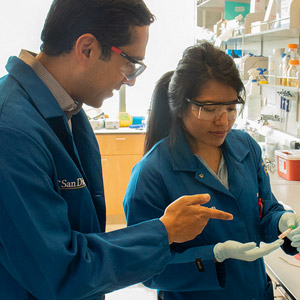
Ceramides—waxy, oily lipid molecules that affect biological function like insulin resistance, gene regulation and tumor suppression—could be applied to new cancer treatments…if only scientists could study them directly in living organisms. Tackling this task with a brand of chemistry that addresses biological challenges, University of California San Diego Professor Neal Devaraj produced research results that confront the limitations of studying ceramides.
Scientists have long pondered how non-living materials coalesced into the earliest life forms on Earth. Nearly 60 years ago Stanley Miller and Harold Urey, founding professors of the physical sciences at the University of California San Diego, established a tradition of working to answer questions about life’s molecular origins. Professor Neal Devaraj continues that UC San Diego legacy by using chemistry to solve questions in biology, while also developing new tools that uniquely perform tasks within living cells. For his inventive work, the Blavatnik Family Foundation and the New York Academy of Sciences have announced Devaraj as the 2018 Blavatnik National Laureate in Chemistry.
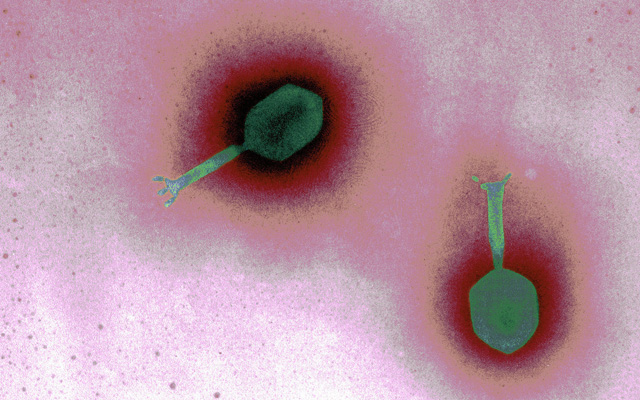
With microbial resistance to antibiotics growing into a major global health crisis, researchers at University of California San Diego School of Medicine, in collaboration with national research institutions and private industry, are leveraging hard-won expertise to exploit a natural viral enemy of pathogenic bacteria, creating North America’s first Center for Innovative Phage Applications and Therapeutics (IPATH).