CRLA-Certified Tutoring Program Enhances Learning and Support for First-Year Medical Students
Story by:
Media contact:
Published Date
Story by:
Media contact:
Topics covered:
Share This:
Article Content
The University of California San Diego School of Medicine was recently recognized as a Level 1 certified tutor training program by the internationally recognized College Reading and Learning Association (CRLA).
The School of Medicine’s peer tutoring program meets CRLA’s rigorous standards and has successfully completed the International Tutor Training Program Certification (ITTPC) peer review process which requires high standards for tutor selection, training, direct service and evaluation as integral parts of the overall tutoring program.
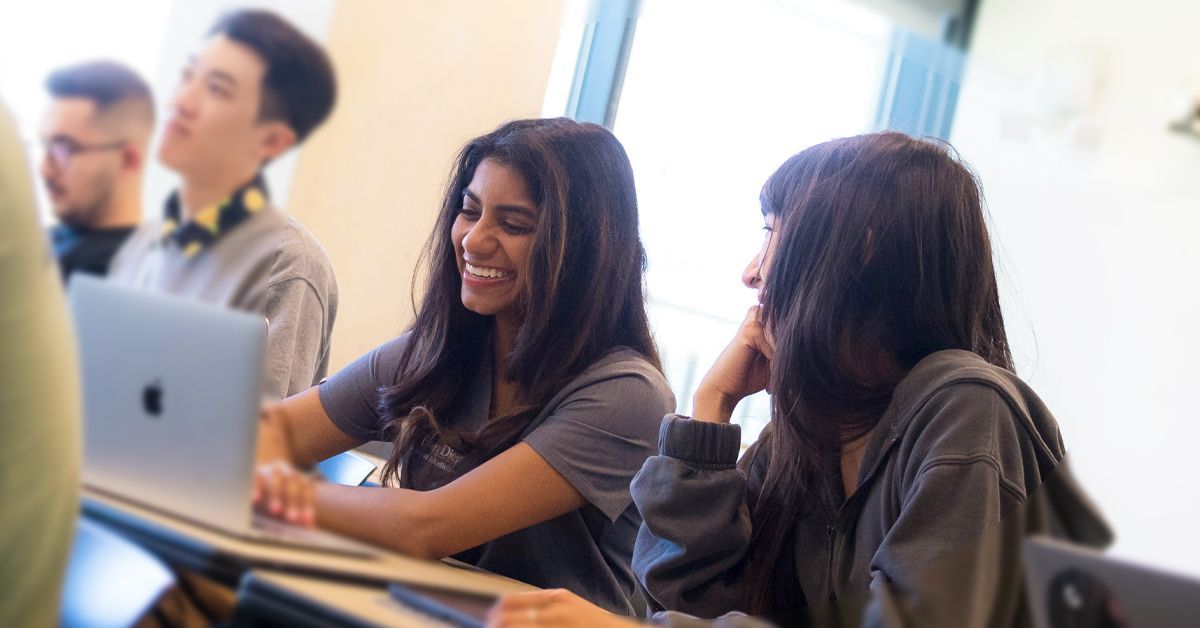
The peer tutoring program was established three years ago under the direction of Mitchell Dandignac, PhD, director of academic support for the School of Medicine. The program pairs first-year medical students with second-year medical students to meet weekly for both curriculum review and peer support to help ease the transition into medical school.
“The program is designed to support students in getting through the first-year curriculum,” said Dandignac. “The students primarily meet one-on-one with their tutor. What we have found though is the sessions are beneficial for both the first- and second-year students as the subject material aligns well with a lot of the testable material for the Step 1 exam that the second-year students will take in the spring.”
For third-year medical student, Kristin Daniels, becoming a peer tutor when she was in her second year changed the way that she studies and learns.
“Since everyone has different learning styles, tutoring forced me to adapt my teaching techniques,” said Daniels. “This required me to think about the material from new perspectives, which actually increased the depth and scope of my knowledge. Sometimes the students’ questions would expose gaps in my own understanding, which pushed me to review those areas and ultimately develop a more thorough grasp of the material.”
Peer tutors must meet certain academic standards to become part of the program. If they have scored 80% or above on the coursework, they can apply and then interview with Dandignac to determine if the program is a good fit.
“We try to make sure the program is beneficial to both the tutors and the students,” said Dandignac. “We allow the tutors to set their availability to what works best for them. The tutors then go through ten hours of training to help them understand different techniques to approach the different styles of learning that may encounter with their students.”
First-year medical student Adrian Rios said that his tutor, Brayan Fernando Chavez, has been incredibly helpful in breaking down difficult concepts and helping him find ways to better understand them.
“At first, I found reading EKGs confusing,” said Rios. “But Brayan just broke it down in a digestible way that made sense. Now it’s easier for me to understand because I go back to the things he showed me.”
Rios added how beneficial it is having a peer tutor who has been exactly where Rios is today.
“Because he is a second-year student, my tutor knows exactly what we are learning and where we need to focus our studies,” said Rios. “It’s only been a year since he was in my shoes. Our professors are experts in their field, so they teach on a range and variety of topics. It’s very easy to get lost because they give us so much information. My peer tutor helps to focus my attention on the key topics and concepts to form that basis that I need to know now before we branch out to the wider topics.”
For students like Rios, who took four gap years before beginning medical school, the peer tutoring program is also helping him readjust and adapt to being back in a learning environment.
“I’ve been a tutor for others in the past,” said Rios. “I knew how helpful the support could be, so I wanted to take every opportunity for learning that was presented to me. When I was in community college, I tutored people who were taking the same classes I had taken, but maybe with a different instructor. This program [at the School of Medicine] is unique because the tutors have taken the exact same courses, so they bring a higher level of knowledge and insight into the structure of the courses and what we need to know and when we need to know it.”
Daniels explained that for her sessions, her students would typically send topics ahead of time to help her plan what they would cover.
“During the session, we’d go over key concepts, work through practice problems, and I’d draw things out on the whiteboard or the iPad to help visualize more difficult topics. We usually finish by reviewing a few more problems to reinforce what we had covered,” she said.
In addition to the knowledge sharing, Daniels noted that being a peer tutor last year also helped her build meaningful relationships with the first-year students.
“It was a rewarding way to give back, reinforce my own knowledge, and stay connected with the pre-clinical curriculum,” said Daniels. “The first year of medical school can be a really tough transition. Those first six months in particular can feel like you are drinking from a fire hose, so it was very rewarding for me to assist students in working through those first year challenges.”



Stay in the Know
Keep up with all the latest from UC San Diego. Subscribe to the newsletter today.
