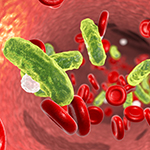
Researchers at UC San Diego have developed macrophage "nanosponges"—nanoparticles cloaked in the cell membranes of macrophages—that can safely remove sepsis-causing molecules from the bloodstream. In lab tests, these macrophage nanosponges improved survival rates in mice with sepsis.
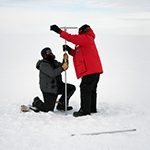
There is a new way to measure the average temperature of the ocean thanks to researchers at Scripps Institution of Oceanography at the University of California San Diego.
Brightly colored Australian peacock spiders (Maratus spp.) captivate even the most arachnophobic viewers with their flamboyant courtship displays featuring diverse and intricate body colorations, patterns, and movements – all packed into miniature bodies measuring less than five millimeters in size for many species. However, these displays are not just pretty to look at. They also inspire new ways for humans to produce color in technology.
Every day, every inch of skin on your body comes into contact with thousands of molecules — from food, cosmetics, sweat, the microbes that call your skin home. Now researchers can create interactive 3D maps that show where each molecule lingers on your body, thanks to a new method developed by University of California San Diego and European Molecular Biology Laboratory (EMBL) researchers. The technique is published December 21 in Nature Protocols.
Pharmaceutical interventions are routinely prescribed to help people quit smoking. However, a new study by University of California San Diego School of Medicine researchers suggests that, despite promising results in clinical trials, smoking cessation drugs alone may not be improving the chances of successful quitting among smokers in general.
Historical cliff erosion rates may have little power to predict future risk, according to a recent study from the Scripps Institution of Oceanography at the University of California San Diego that used laser data to create 3D maps. The new research provides accurate erosion rates for 680 miles of the California coast, from the US-Mexico border to Bodega Head in Sonoma County. It identifies areas that have eroded faster than others, and introduces a new experimental hazard scale to identify areas that may be at greater risk of impending collapse.