CENIC Recognizes Technology Projects to Combat California Wildfires
WIFIRE, HPWREN, AlertTahoe Projects Win 2018 Innovations in Networking Awards
Computers have helped researchers develop a new phosphor that can make LEDs cheaper and render colors more accurately. An international team led by engineers at UC San Diego first predicted the new phosphor using supercomputers and data mining algorithms, then developed a simple recipe to make it in the lab. Unlike many phosphors, this one is made of inexpensive, earth-abundant elements and can easily be made using industrial methods. As computers predicted, the new phosphor performed well in tests and in LED prototypes.
Four early-career scientists at UC San Diego have been recognized for their outstanding promise in the fields of physics and computational & evolutionary molecular biology as 2018 Sloan Research Fellows.
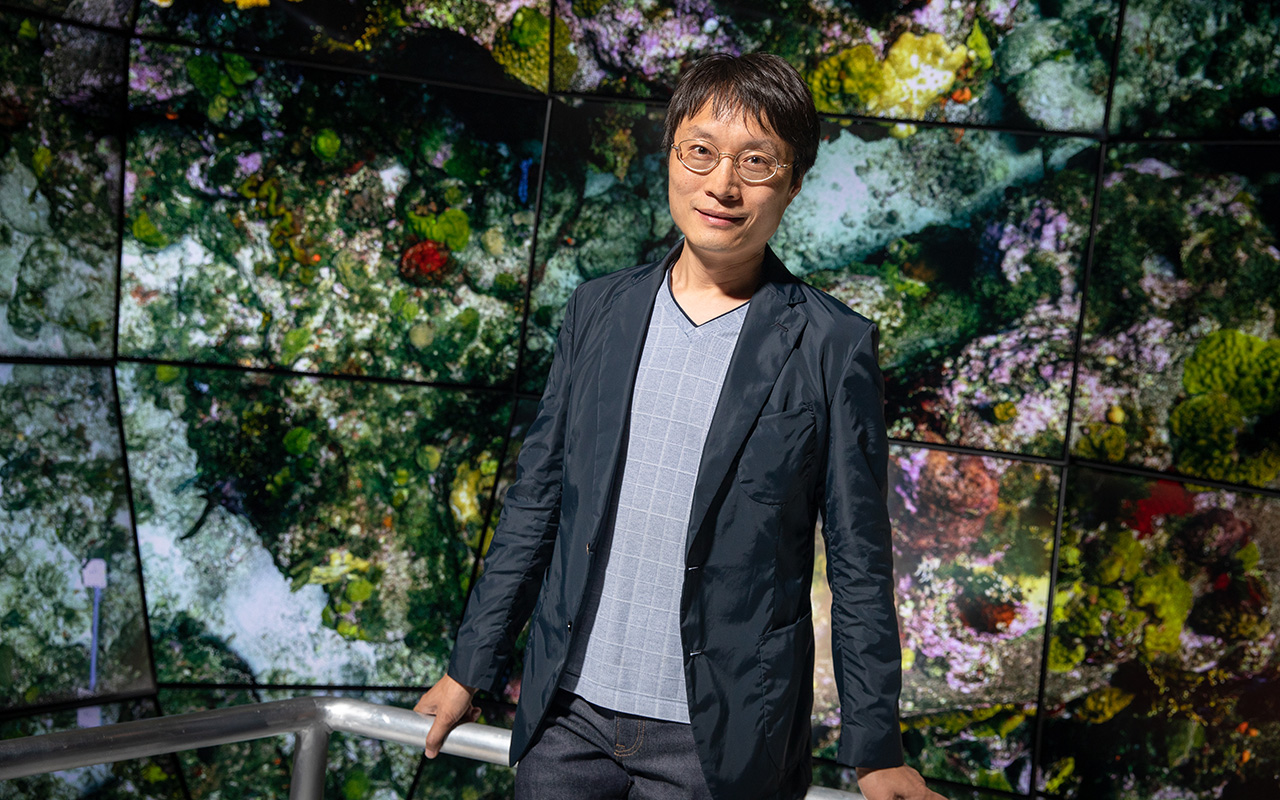
A collaborative group of researchers from the University of California San Diego traveled to Turin, Italy recently to digitally map an entire portion of the city-complete with historic architecture, expansive murals and stunning works of art.
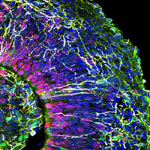
Researchers at University of California San Diego School of Medicine and Shiley Eye Institute at UC San Diego Health have discovered that a chemical compound that activates ATF6, a gene associated with an inherited vision impairment, also converts patient-derived stem cells into blood vessels.
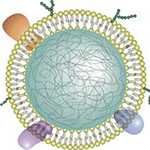
Armed with skill, special tools and light, University of California San Diego Associate Professor Neal Devaraj and a group of his chemistry graduate students activated cellular gene expression with unique precision. By modifying messenger RNA (mRNA)—a group of molecules that carries genetic information from DNA to ribosomes where specifications of gene expression occur—the chemists were able to precisely trigger gene expressions at a specific time and place using laser light. This novel technique will ease future studies of individual protein functions in cells or tissues at different stages of biological development.
Keep up with all the latest from UC San Diego. Subscribe to the newsletter today.
You have been successfully subscribed to the UC San Diego Today Newsletter.