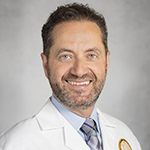
The Amazonian Center of Excellence for Malaria Research, headed by Joseph Vinetz, MD, professor of medicine and tropical disease specialist at University of California San Diego School of Medicine, will receive up to approximately $8.3 million over seven years from the National Institute of Allergy and Infectious Diseases (NIAID), part of the National Institutes of Health.
With April designated as National Distracted Driving Awareness month, a team of researchers at the Training, Research and Education for Driving Safety (TREDS) program at University of California San Diego School of Medicine has released survey results describing the habits of senior drivers in California.
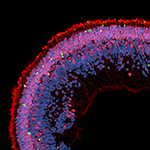
Using the gene-editing tool CRISPR/Cas9, researchers at University of California San Diego School of Medicine and Shiley Eye Institute at UC San Diego Health, with colleagues in China, have reprogrammed mutated rod photoreceptors to become functioning cone photoreceptors, reversing cellular degeneration and restoring visual function in two mouse models of retinitis pigmentosa.
Somewhere in the at-risk ruins of Khirbat en-Nahas in the Faynan region of southern Jordan lie untold stories of copper mining and smelting industries from the time of David and Solomon and the Edomite kings. Stories that, until now, could only be told in words, maps and photographs. Thanks to UC San Diego engineering and archaeology students that teamed up for the world’s first cyber-archaeology hackathon, the story of King Solomon’s copper mines now exists in virtual reality.
Rock star drummer Rikki Rockett feels very lucky to be on tour with his band, Poison. A year ago, he didn’t know if he would survive tongue cancer but after participating in an immunotherapy clinical trial at Moores Cancer Center at UC San Diego Health, he was declared cancer-free in July 2016. To give back, Rockett is now asking concert-goers to join him in supporting immunotherapy at Moores Cancer Center.
By applying a novel computer algorithm to closely mimic how the brain learns, a team of researchers – with the aid of the Comet supercomputer based at the San Diego Supercomputer Center (SDSC) at UC San Diego – has identified and replicated neural circuitry that resembles the way an unimpaired brain controls limb movement.