Under the invisible beam of the scanning electron microscope, the bottom of a gecko’s foot resolved into a field of tiny hairs. As both sample and microscope sat miles away in the Nano3 laboratory of UC San Diego’s Qualcomm Institute, a high school biology class at the Kearny School of College Connections used a touch screen to zoom in and out and examine the sample in detail. With 60,000 times the magnification and more than 500 times the resolution of the average classroom microscope, the high-powered machine offered students a rare chance to see the world as scientists.
Researchers say a gene known to be a biomarker of age plays a key role in age-associated functional and anatomical aging in mouse retinas, a finding that has direct relevance to age-related eye diseases.
The American Association for Thoracic Surgery (AATS) has adopted an open-source, cloud-based platform led out of the San Diego Supercomputer Center (SDSC) that addresses widely recognized challenges with historical platforms throughout the cardiothoracic surgical community.
Using novel imaging technologies, researchers produce first whole-brain atlas at single-cell resolution, revealing how alcohol addiction and abstinence remodel neural physiology and function in mice.
University of California San Diego School of Medicine researchers report that patients with prostate cancer assigned to eat seven or more servings of vegetables and fruits daily saw no extra protection from the increased consumption of micronutrients, running contrary to current thought.
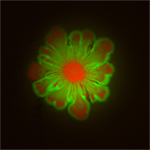
Researchers at University of California San Diego have discovered that when certain microbes pair up, stunning floral patterns emerge. When non-motile E. coli are placed on an agar surface together with motile A. baylyi, the E. coli “catch a wave” at the front of the expanding A. baylyi colony.