Too Much of a Good Thing May Lead to Too Much of a Liver As Well
UC San Diego researchers suggest that prolonged exposure to a pair of antioxidant proteins may contribute to enlargement of the liver and fatty liver diseases.
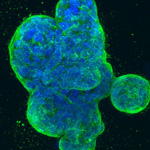
UC San Diego bioengineers developed a control system that could make CAR T-cell therapy safer and more powerful when treating cancer. By programming CAR T cells to switch on when exposed to blue light, the researchers controlled the cells to destroy skin tumors in mice without harming healthy tissue
In a new study, researchers at University of California San Diego School of Medicine confirmed the findings of previous pilot studies that found an association between human milk concentrations and infant weight and body composition.
More portable, fully wireless smart home setups. Lower power wearables. Batteryless smart devices. These could all be made possible thanks to a new ultra-low power WiFi radio developed by UC San Diego engineers. It enables WiFi communication at 5,000 times less power than commercial WiFi radios.
Researchers at UC San Diego School of Medicine report that abnormal levels of beta-amyloid plaques in brain predict cognitive decline and higher risk of developing Alzheimer’s disease, but also that cognitive performance predicts progression from normal to abnormal levels of beta-amyloid.
For the first time ever, Birch Aquarium at Scripps Institution of Oceanography, UC San Diego has bred and successfully hatched two rare Weedy Seadragons. This is a first for Birch Aquarium, now one of the few aquariums in the world to hatch this unusual fish.
Keep up with all the latest from UC San Diego. Subscribe to the newsletter today.
You have been successfully subscribed to the UC San Diego Today Newsletter.