John Wooley: In Memoriam
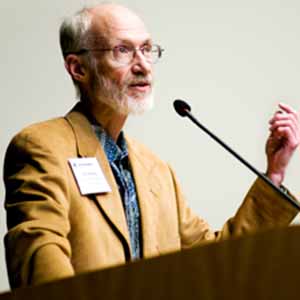
Dr. John Wooley, the long-time associate vice chancellor for research and professor of pharmacology at the University of California, San Diego, passed away in April after a long battle with cancer.
Dr. John Wooley, the long-time associate vice chancellor for research and professor of pharmacology at the University of California, San Diego, passed away in April after a long battle with cancer.
The National Science Foundation and the San Diego Supercomputer Center (SDSC) at the University of California, San Diego, have agreed to transfer ownership of its Trestles supercomputer cluster to the Arkansas High Performance Computing Center.
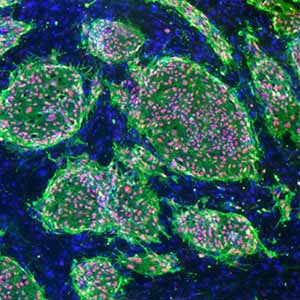
Human pluripotent stem cells possess the ability to grow into almost any kind of cell, which has made them dynamic tools for studying early human development and disease, but much depends upon what they grow up in. Writing in the May 4 online issue of the journal Scientific Reports, researchers at University of California, San Diego School of Medicine used a powerful statistical tool called “design of experiments” to determine the optimal cell culture formula to grow and produce hPSCs.
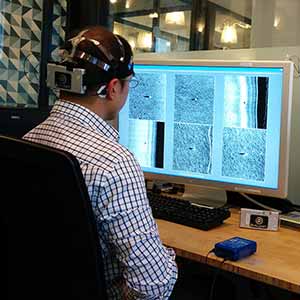
Computer scientists at the University of California, San Diego, have combined sophisticated computer vision algorithms and a brain-computer interface to find mines in sonar images of the ocean floor. The study shows that the new method speeds detection up considerably, when compared to existing methods—mainly visual inspection by a mine detection expert.
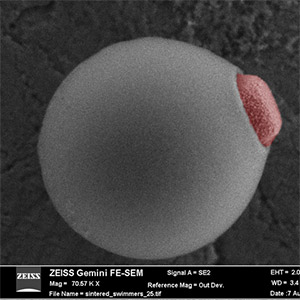
Synthetic microscopic beads sense changes in their environment and self-propel to migrate upstream, a step toward the realization of biomimetic microsystems with the ability to sense and respond to environmental changes.
Researchers at UC San Diego School of Medicine conducted the first population-based study that characterizes the association and temporal relationship between gastrointestinal stromal tumors (GIST) and other cancers. The results, published by Cancer on April 30, indicate that one in 5.8 patients with GIST will develop additional malignancies before and after their diagnosis.
Keep up with all the latest from UC San Diego. Subscribe to the newsletter today.