The University of California, San Diego has been named the 11th most ethnically diverse college in the nation, according to a new report. Best College Reviews, a ranking service for American colleges and universities, recently released a list of the top 50 ethnically diverse schools. Statistics and definitions of race/ethnicity for the list were gathered from the National Center for Education Statistics, Diverse Issues in Higher Education and school websites. According to the report, UC San Diego looks at diversity as an opportunity for education.
When the University of California pledged to become carbon neutral by 2025, nobody said it would be easy. At the outset, everyone agreed that the Carbon Neutrality Initiative would require all hands on deck from staff, faculty and students alike to make its ambitious goal a reality.
More than 1,000 computer science students gathered in a massive air-conditioned tent at UC San Diego’s Triton Track and Field Stadium Oct. 2-4 for the first-ever SD Hacks competition. The 36-hour round-the-clock hackathon challenged student teams to generate innovative working projects or “hacks” that rely on software, biotechnology, virtual reality, and more.
Roughly one in nine people on Earth do not have enough food to eat. And climate change is only making it harder for farmers to meet the global demand for food, according to the Intergovernmental Panel on Climate Change (IPCC). By 2030, the IPCC expects climate change to reduce crop and pasture yields by as much as 14 percent in some parts of the world. Adapting crops, livestock and fisheries will be critical for global food security.
UC San Diego Health and Tri-City Healthcare District announced today that they have entered into an exclusive, long-term strategic affiliation designed to enhance the delivery of high quality health care to patients in North San Diego County.
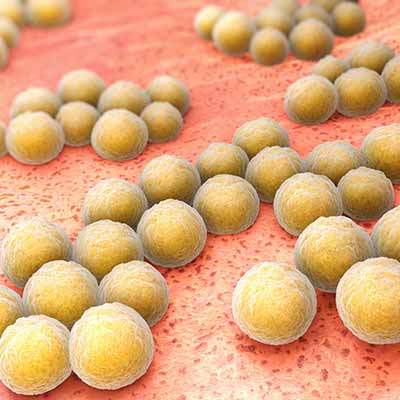
The most severe strep infections are often the work of one strain known as M1T1, named for the type of tentacle-like M protein projecting from the bacterium’s surface. Researchers at University of California, San Diego School of Medicine and Skaggs School of Pharmacy and Pharmaceutical Sciences have uncovered a new way M1 contributes to strep virulence — the protein’s ability to hold off antimicrobial peptides. The study is published October 14 by Cell Host & Microbe.