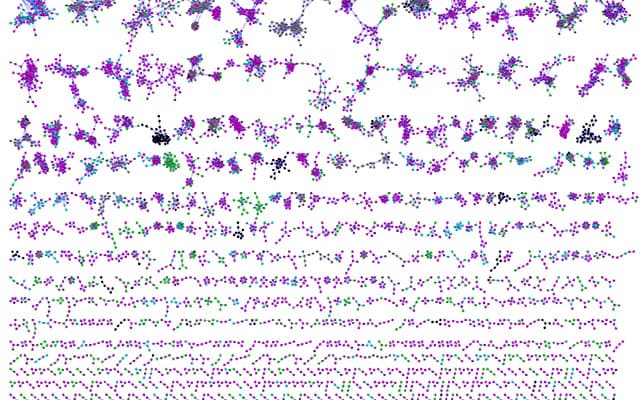
Microbiome researchers Rob Knight, PhD, University of California San Diego, Jeffrey Gordon, MD, Washington University School of Medicine in St. Louis, and Norman Pace, PhD, University of Colorado Boulder, will share this year’s Massry Prize, splitting the $200,000 honorarium. These researchers lead a field that works to produce a detailed understanding of microbiomes and methods for manipulating them for the benefit of human and environmental health.
UC San Diego Health and its medical and surgical specialties have been recognized as among the best in the nation by U.S. News & World Report for 2017-18. The annual “Best Hospitals” rankings distinguish hospitals that excel in treating the most challenging health conditions.
UC San Diego Health has moved its electronic medical records (EMR) system to the cloud. The move to an Epic-hosted cloud environment is part of a long-term strategy to shift away from traditional data centers to a less expensive, more reliable and secure repository for patients’ medical records.
Scientists at UC San Diego have provided the first evidence that lysosomes, specialized structures found in nearly every cell in your body, can travel to distant parts of neurons to branch-like areas known as dendrites. Lysosomes help keep balance in the brain by removing material that is no longer needed, a key function that could be associated with disorders such as Parkinson’s and Alzheimer’s.
Kyoto University of Japan, one of the University of California San Diego’s international partners, announced the opening of a liaison office in San Diego in late March. UC San Diego played a key role in establishing the office designed to ease in partnering and collaboration.
Group A Streptococcus bacteria — the cause of strep throat and flesh-eating infections — have been well studied for nearly a century. But researchers at University of California San Diego School of Medicine and Skaggs School of Pharmacy and Pharmaceutical Sciences recently made a surprising discovery: strep’s M protein alone wipes out macrophages, but not other types of immune cells. The macrophages’ self-sacrifice serves as an early warning of infection to the rest of the immune system.