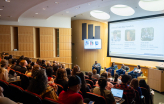
Rick Hanson, PhD, author of the book Buddha’s Brain and founder of the Wellspring Institute for Neuroscience and Contemplative Wisdom, will present his lecture "Taking in the Good: Helping Children Build Inner Strength and Happiness” at the UC San Diego Medical Center Auditorium on Friday, February 3.
The National Academy of Sciences (NAS) will honor 17 individuals with awards in recognition of their extraordinary scientific achievements in a wide range of fields spanning the physical, biological, and social sciences. Among them is Larry R. Squire, PhD, Distinguished Professor of Psychiatry, Neurosciences, and Psychology at the University of California, San Diego School of Medicine, and research career scientist at VA Medical Center, San Diego.
Smoking is a major public health issue and quitting is the single most important thing smokers can do to improve their health. In the 2012 edition of the prestigious Annual Review of Public Health, researchers at the University of California, San Diego School of Medicine have reviewed the landscape of smoking cessation over the past 20 years.
A team led by Alan Hemming, MD, transplant surgeon at UC San Diego Health System, has successfully performed the west coast’s first ex-vivo liver resection, a radical procedure to completely remove and reconstruct a diseased liver and re-implant it without any tumors.
Researchers at the California Teratogen Information Service (CTIS) Pregnancy Health Information Line, a state-wide non-profit organization based at the University of California, San Diego, have found new links between the timing of alcohol consumption during pregnancy and certain characteristics of Fetal Alcohol Syndrome (FAS).
Scientists from the San Diego Supercomputer Center (SDSC) and other areas of the University of California, San Diego, conducting research in physics, computer science, earth science, and engineering, together were awarded an all-time high of more than a quarter billion hours in supercomputing processor time by the U.S. Department of Energy (DOE) as part of the agency’s 2012 Innovative and Novel Computational Impact on Theory and Experiment (INCITE) program.