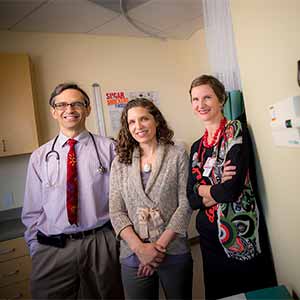
UC San Diego Physicians Head Clinic Offering Care to Children With Gender Identity Issues
When Sarah was 3 years old, she turned to her mother and asked when she was going to get the same body parts as her brother.
When Sarah was 3 years old, she turned to her mother and asked when she was going to get the same body parts as her brother.
Urologists at University of California San Diego School of Medicine and Genesis Healthcare Partners have tested a new model of care for patients with low-risk prostate cancer. The evidence-based approach uses best practices to appropriately select and follow patients to avoid disease overtreatment. Results of the three-year study are now published online in the journal of Urology.
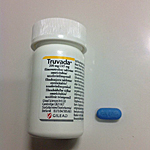
The California HIV/AIDS Research Program (CHRP) of University of California has awarded grants totaling $9.4 million to three teams of investigators to provide and evaluate PrEP – the HIV prevention pill – among transgender persons at risk for HIV acquisition in California.
While technological advances have made it easier to map our microbiomes and metabolomes, these studies typically take too long for that data to be medically useful. Researchers at the University of California San Diego Center for Microbiome Innovation used the 2016 San Diego Fermentation Festival as a test case for a novel rapid response system. In the study, published in mSystems, the team collected samples, analyzed data and reported conclusions in an unprecedented 48 hours.
Compared to the nicotine patch and a placebo, the smoking cessation aids varenicline (marketed as Chantix in the U.S.) and bupropion (Zyban) do not show a significant increase in neuropsychiatric adverse events, reports an international team of researchers in a study published online April 22 in the journal The Lancet.
Thanks to combination antiretroviral therapies, many people with HIV can expect to live decades after being infected. Yet doctors have observed these patients often show signs of premature aging. Researchers at University of California San Diego School of Medicine and the University of Nebraska Medical Center have applied a highly accurate biomarker to measure just how much HIV infection ages people at the cellular level — an average of almost five years.
Keep up with all the latest from UC San Diego. Subscribe to the newsletter today.