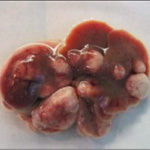
Primary liver cancer is now the second leading cause of cancer-related death worldwide, and its incidences and mortality are increasing rapidly in the United Stated. In late stages of the malignancy, there are no effective treatments or drugs. However, an unexpected finding made by a team of University of California San Diego School of Medicine researchers sheds light on the development of a new strategy for prevention of liver cancer.
Chronic inflammation is known to drive many cancers, especially liver cancer. Researchers have long thought that’s because inflammation directly affects cancer cells, stimulating their division and protecting them from cell death. But University of California San Diego School of Medicine researchers have now found that chronic liver inflammation also promotes cancer by suppressing immunosurveillance — a natural defense mechanism in which it’s thought the immune system suppresses cancer development.
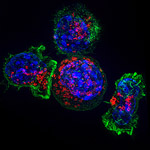
The five University of California medical centers, including Moores Cancer Center at UC San Diego Health, have joined together to recruit 100,000 women in California to be part of WISDOM: a clinical trial to uncover whether annual mammograms are the best way to screen for breast cancer, or whether a more personalized approach could deliver better results.
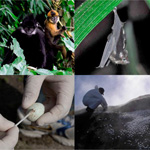
In the Earth Microbiome Project, an extensive global team co-led by researchers at University of California San Diego, Pacific Northwest National Laboratory, University of Chicago and Argonne National Laboratory collected more than 27,000 samples from numerous, diverse environments around the globe. They analyzed the unique collections of microbes — the microbiomes — living in each sample to generate the first reference database of bacteria colonizing the planet. Thanks to newly standardized protocols, original analytical methods and open data-sharing, the project will continue to grow and improve as new data are added.
Spanning two years, from March 2015 to February 2017, CAIDA researchers and their collaborators found that about one-third of the IPv4 address space was subject to some kind of DoS attacks, where a perpetrator maliciously disrupts services of a host connected to the internet.
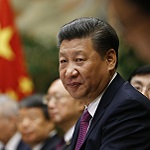
Leading China scholars at the UC San Diego 21st Century China Center answer critical questions for the future of China’s development and United States-China relations. Coinciding with the Chinese Communist Party’s 19th Congress, the researchers released six essays analyzing an equally important aspect of the U.S.-China relationship: current president Xi Jinping’s potential succession, geopolitics, economic policy, information control by the government and the role of the military.