The Doctrine of Doctors
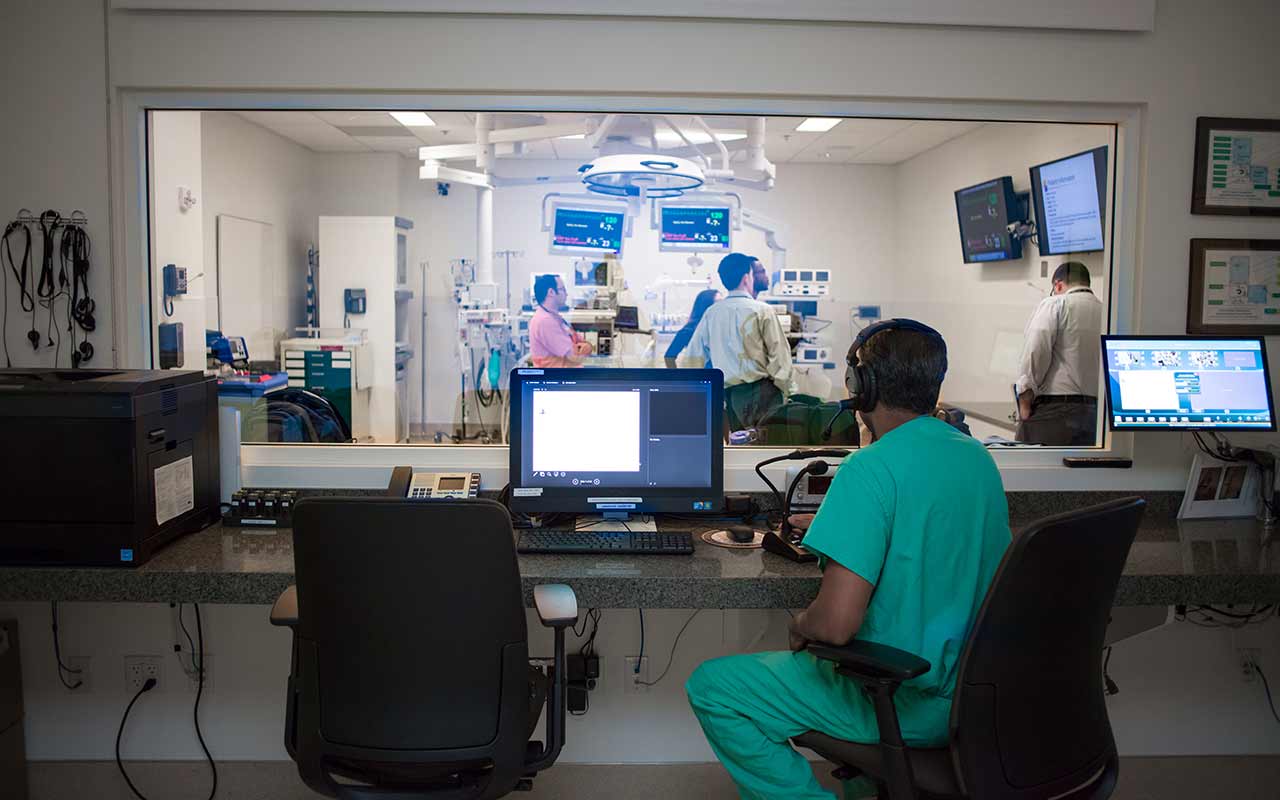
In a few months, a new class of students will begin studies at UC San Diego School of Medicine, future doctors in pursuit of future careers. They will look a lot like the inaugural class that opened the school 50 years ago.
In a few months, a new class of students will begin studies at UC San Diego School of Medicine, future doctors in pursuit of future careers. They will look a lot like the inaugural class that opened the school 50 years ago.
Researchers at University of California San Diego School of Medicine and Shiley Eye Institute at UC San Diego Health have discovered that a chemical compound that activates ATF6, a gene associated with an inherited vision impairment, also converts patient-derived stem cells into blood vessels.
The first datasets from the largest long-term study of brain development and child health in the United States—a project headed by a team of scientists at UC San Diego—were released to researchers around the world today by the National Institutes of Health.
Aswini Krishnan, a fourth-year bioengineering major at the University of California San Diego, has been awarded a Churchill Scholarship, one of the most prestigious and competitive awards available to American students pursuing science, mathematics and engineering fields. The award provides one year of funding to pursue a master’s degree at Winston Churchill College at the University of Cambridge. Krishnan is the fourth UC San Diego student to receive the award since the program’s inception in 1963.
Philippe Sands has been dedicated to human rights issues throughout his career and has worked on high-profile human rights cases involving abuse. Now, in his book East West Street, Sands explores the creation and development of legal concepts that came about as a result of Hitler's Third Reich which changes our understanding of history and how civilization has tried to cope with mass murder.
Ever wonder why obese bodies burn less calories or why dieting often leads to a plateau in weight loss? In both cases the body is trying to defend its weight by regulating energy expenditure. In a paper publishing in Cell on February 8, University of California San Diego School of Medicine researchers identify the enzyme TANK-binding kinase 1 (TBK1) as a key player in the control of energy expenditure during both obesity and fasting.
Keep up with all the latest from UC San Diego. Subscribe to the newsletter today.