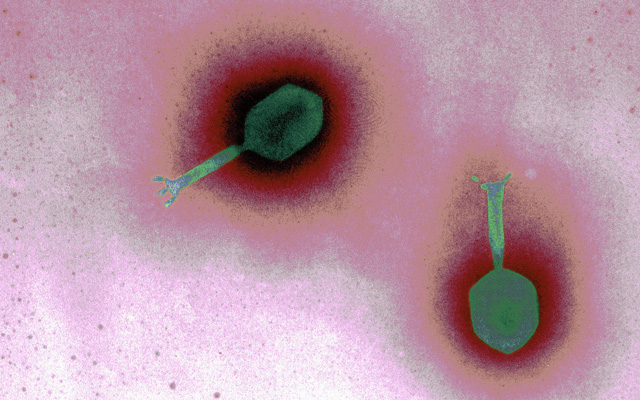
With microbial resistance to antibiotics growing into a major global health crisis, researchers at University of California San Diego School of Medicine, in collaboration with national research institutions and private industry, are leveraging hard-won expertise to exploit a natural viral enemy of pathogenic bacteria, creating North America’s first Center for Innovative Phage Applications and Therapeutics (IPATH).
Researchers at University of California San Diego School of Medicine suggest higher levels of vitamin D are associated with decreasing risk of breast cancer. Their epidemiological study is published in the June 15 online issue of PLOS ONE, in collaboration with Creighton University, Medical University of South Carolina and GrassrootsHealth, an Encinitas-based nonprofit organization that promotes vitamin D research and its therapeutic benefits.
The Pew Charitable Trusts has announced that UC San Diego Biological Sciences Assistant Professors Matthew Daugherty and Enfu Hui have been selected to the 2018 class of Pew Scholars in the Biomedical Sciences. Pew also announced that Diego Alvarez and Grisel Cruz Becerra, Biological Sciences postdoctoral researchers, have been named new Pew Latin American Fellows in the Biomedical Sciences.
Graphene electrodes could enable higher quality imaging of brain cell activity thanks to new research by a team of engineers and neuroscientists at the University of California San Diego.
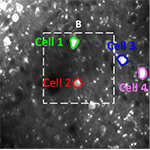
The researchers developed a technique, using platinum nanoparticles, to lower the impedance of graphene electrodes by 100 times while keeping them transparent. In tests on transgenic mice, the electrodes were able to record and image neuronal activity (calcium ion spikes) at both the macroscale and single cell levels.
A team led by researchers at UC San Diego’s Department of Chemistry and Biochemistry and SDSC has used machine learning techniques to develop models for simulations of water with “unprecedented accuracy.” Published online in The Journal of Chemical Physics, the research demonstrates how popular ML techniques can be used to construct predictive molecular models based on quantum mechanical reference data.
Neglected tropical diseases are a group of chronic and disabling parasitic infections that primarily affect poor and underserved communities. These diseases affect more than 1 billion people globally, yet are rarely the target of new drug discovery efforts. Leveraging its strengths in molecular biology, clinical research and pharmaceutical sciences, the University of California San Diego has now launched a new Center for Anti-Parasitic Drug Discovery and Development to address this unmet need in global health.