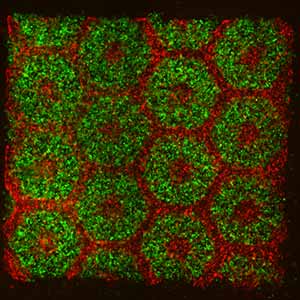
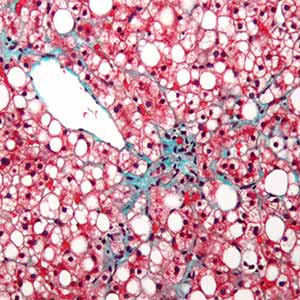
A team led by engineers at the University of California, San Diego has 3D-printed a tissue that closely mimics the human liver’s sophisticated structure and function. The new model could be used for patient-specific drug screening and disease modeling. Researchers said the advance could help pharmaceutical companies save time and money when developing new drugs.
Roughly one-quarter of all Americans – an estimated 100 million adults and children – have nonalcoholic fatty liver disease (NAFLD), a chronic condition that can lead to cirrhosis, liver cancer and liver failure. Combining a diverse array of basic science, biomarkers, imaging and clinical efforts, University of California, San Diego School of Medicine has launched a new NAFLD Research Center to better understand the disease and develop treatments where none currently exist.
Electrical engineers at the University of California, San Diego have developed a pedestrian detection system that performs in near real-time and with higher accuracy than existing systems. The technology, which incorporates deep learning models, could be used in “smart” vehicles, robotics and image and video search systems.
Looking back at a two-year interactive course linking the Qualcomm Institute and a classroom in Bangladesh, UC San Diego alumnus Robert Hooper (BA '69) reports success in teaching young filmmakers to combat violent extremism.
A 2013 University of California, San Diego M.F.A. graduate in acting, Ngozi Anyanwu, has won the inaugural Humanitas Prize for “Good Grief,” a play about a first-generation Nigerian girl dealing with love and loss in a small Pennsylvania town. Chosen from more than 230 submissions, “Good Grief” will be presented in staged readings Feb. 12-14 at the Humanitas Play Festival in Culver City.
The University of California, San Diego Division of Arts and Humanities recently sponsored, “The Scarlet Stone,” a modern dance/theater retelling of a tragic Persian myth developed by Shahrokh Yadegari, professor of sound design in the Department of Theatre and Dance. The production was performed last summer at UC San Diego’s Mandell Weiss Forum, toured to Toronto—for the Tirgan Festival, the largest Persian arts festival in the western hemisphere—and then to Los Angeles at UCLA's Royce Hall. This production, which involves university faculty and alumni, is now set to reach more than 14 million viewers worldwide through four satellite broadcasts during the week of Feb. 8 on BBC Persian in Iran, Tajikistan and Afghanistan, and online streaming at the time of broadcast.