Since 2007, UC San Diego’s Operation Santa has provided Christmas celebrations for 731 San Diego families who are facing financial hardship. Many of the families served by Operation Santa are led by single mothers as well as those who are victims of domestic violence, facing illness, experiencing the loss of a family member or struggling financially. Each year, Alpha Phi Omega encourages community members to nominate families in need and gives individuals and organizations the opportunity to participate as “adopters.” Operation Santa matches families with “adopters” who, after receiving the nominated family’s gift wish list, buy, wrap and deliver holiday presents to families by Dec. 24. As Operation Santa has grown over the years, Alpha Phi Omega has seen a rise in the number of families nominated to receive help during the holiday season; however, the number of nominated families continues to outpace adopters: the ratio of nomination applications to adoption applications is 4 to 1.
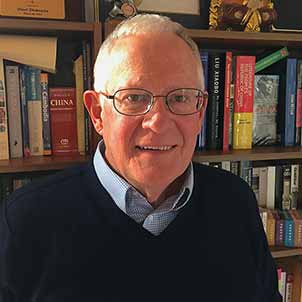
George Hemingway, a seagoing biological oceanographer and academic administrator who spent more than 30 years at Scripps Institution of Oceanography at UC San Diego, passed away on Nov. 8, 2015.
The Association for the Sciences of Limnology and Oceanography (ASLO) has recognized three Scripps Institution of Oceanography at UC San Diego professors as 2015 Sustaining Fellows in honor of their sustained excellence in contribution to ASLO and the aquatic sciences.
University of California, San Diego scientists and students will be traveling to international climate negotiations in Paris next week to spur the momentum toward effective international climate action that UC San Diego scientists have been instrumental in creating
Using a groundbreaking gene editing technique, biologists at UC San Diego, working in collaboration with biologists at UC Irvine, have created a strain of mosquitoes capable of rapidly introducing malaria-blocking genes into a mosquito population through its progeny, ultimately eliminating the insects’ ability to transmit the disease to humans.
Engineers at the University of California, San Diego developed a new technology that uses an oscillating electric field to easily and quickly isolate drug-delivery nanoparticles from blood. The technology could serve as a general tool to separate and recover nanoparticles from other complex fluids for medical, environmental, and industrial applications.