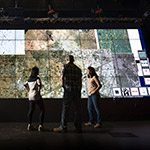
The University of California, San Diego, J. Craig Venter Institute, La Jolla Institute for Allergy and Immunology and The Scripps Research Institute have teamed up to create the “Mesa Consortium,” a new scientific hub for the Human Vaccines Project. Under a collaborative agreement, the Mesa Consortium and the Human Vaccine Project aim to transform current understanding of the human immune system and expedite development of vaccines and biologics to prevent and treat many global diseases.
The University of California, San Diego Division of Arts and Humanities will be well-represented during the 42nd Annual Chancellor’s Associates’ Faculty Excellence Awards April 14, 6:00 p.m., at the Sanford Consortium for Regenerative Medicine on campus. During the event, Chancellor Pradeep K. Khosla will celebrate six exemplary faculty—three of whom hail from the arts and humanities division. They are: David O. Brink, distinguished professor in the Department of Philosophy, recognized for excellence in research in the humanities and social sciences; Teddy Cruz, professor of public culture and urbanism in the Department of Visual Arts, recognized for exemplary community service; and Anya Gallaccio, professor of visual arts, recognized for excellence in the performing and visual arts.
While the stereotypical spring breakers throughout the United States flee to far-flung destinations to absorb sun and fun, UC San Diego student Sophie Silvestri experienced something far more breathtaking.
Researchers at University of California, San Diego School of Medicine report that higher levels of vitamin D – specifically serum 25-hydroxyvitamin D – are associated with a correspondingly reduced risk of cancer. The findings are published in the April 6, online issue of PLOS ONE.
Global carbon dioxide emissions are triggering permanent changes to ocean chemistry along the North American West Coast that require immediate, decisive action to combat. That action includes development of a coordinated regional management strategy, concluded a panel of scientific experts including Andrew Dickson, a professor of marine chemistry at Scripps Institution of Oceanography at UC San Diego.
Researchers at University of California, San Diego School of Medicine have determined that certain gastrointestinal stromal tumors (GISTs) are more deadly than previously reported in medical literature. Findings are published online in the Journal of Gastrointestinal Surgery.