The University of California San Diego is one of three universities to earn the highest-ranking score in a new report card that measures how well public universities across the nation are serving black students. The inaugural survey, conducted by the University of Southern California Center on Race and Equity, graded institutions on four criteria—representation equity, gender equity, completion equity and black students-to-black faculty ratio.
A coalition of students, grassroots organizations, human trafficking survivors and local and global leaders will gather at the University of California San Diego for the Third Annual Global Empowerment Summit on October 6, 2018.
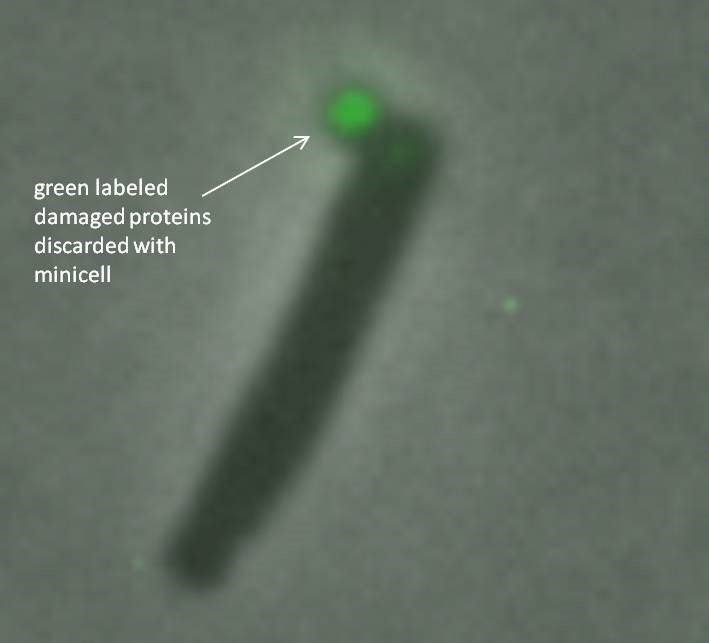
Scientists have known that bacteria produce small spherical versions of themselves. Lacking basic materials to reproduce or function like normal cells, the natural role of minicells—which protrude like budding balloons off the ends of bacteria—has remained a mystery. Now, researchers at UC San Diego have demonstrated for the first time that minicells play a key function in the survival of bacteria.
Grammy Award-winning soprano and UC San Diego Department of Music faculty member Susan Narucki presents the world-premiere chamber opera “Inheritance” on campus Oct. 24, 26 and 27, using the legendary story of Sarah Winchester to address gun violence in the United States.
Access to world class care is now easier, faster and at the fingertips of UC San Diego Health patients and loved ones. With the new MyUCSDHealth mobile application, patients have the ability to manage their health information and communicate with their physicians while family members and friends can find helpful resources, such as visiting hours, directions and parking information.
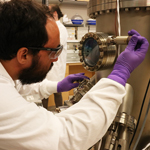
Like consumers investing in a pair of body-shaping jeans, the National Science Foundation (NSF) invests in basic research and people to mold the future. So, the government agency awarded more than $500,000 to the University of California San Diego and the University of Texas at San Antonio (UTSA) to study, for the first time, the exploration of the electronic and magnetic behavior of one-dimensional (1D) metallic chains. In this case, these are ultra-short chains of atoms that can be fabricated using organic molecules called metallo-phthalocyanine (MPc)—flat molecules with a metal atom at the center commonly used in dyes present in the color of blue denim. The findings could lead to the development of new, smaller and faster electronic devices that can be used in computer memories, as well as to promising careers for future scientists.