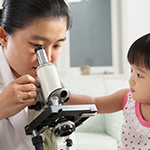
A consortium of nine University of California (UC), including UC San Diego, and 15 California State University (CSU) campuses recently received a five-year, $5 million grant from the National Science Foundation to dramatically increase diversity in physics and astronomy through the Cal-Bridge program. Launched four years ago, Cal-Bridge creates a pathway for underrepresented minority (URM) students from multiple CSU campuses to attend PhD programs in physics and astronomy at UCs across the state. The new NSF grant allows Cal-Bridge to expand from about a dozen URM scholars per year, to as many as 50 statewide, who will benefit from substantial financial support, research opportunities and various workshops.
The campaign platform of Mexico’s President-elect Andres Manuel López Obrador included vows to end corruption in the Mexican government and drive out the political mafia running the country. As López Obrador’s Dec. 1 inauguration nears, his anti-corruption strategy continues to take shape. On Oct. 19 from 10 a.m. to 3 p.m., the UC San Diego’s School of Global Policy and Strategy Center for U.S-Mexican Studies will host a conference, discussing the challenges and opportunities that lie ahead for López Obrador’s administration.
The UC San Diego Department of Visual Arts welcomes the return of celebrated artist Carrie Mae Weems, a distinguished alum who received her MFA from the department in 1984. Weems’ visit anchors a dynamic fall lineup of guests meant to engage and inspire an active student population and artistic community on campus.
The American Physical Society (APS) recently announced its 2018 fellowship class with a 77 percent increase in the number of women compared to last year’s class. According to the APS, this is the most women elected as fellows since tracking the number of females nominated and elected began in 2015, when just 13 percent of fellows were women.
Samsung and the University of California San Diego recently signed a major license agreement for the telecommunications industry, for a standard-essential error-correction technology developed by engineers from the Jacobs School of Engineering. This new technology plays a key role in the 5G wireless communications standard, where it is used to encode and decode polar codes. Polar codes have been recently ratified as part of the 5G New Radio enhanced mobile broadband (eMBB) standard, with commercial deployments expected in 2019 to eventually penetrate hundreds of millions of wireless devices.
This fall, the Holocaust Living History Workshop once again launches its year-long series of educational events composed of eight seminars, a documentary film screening and a photography exhibition underscoring this year’s theme, “History, Memory & Meaning of the Holocaust.” The workshops are presented by the UC San Diego Library and the UC San Diego Jewish Studies Program.