UC San Diego Health Sciences launched a new podcast this month called N Equals One that will feature early-career scientists, such as graduate students and postdocs, talking about hot topics in science. Each will offer the story of one project, one discovery or one scientist.
A campus-wide interdisciplinary research collaborative, the Black Studies Project connects faculty, graduate and undergraduate students from across UC San Diego who are producing cutting-edge scholarship on black life, culture and experiences.
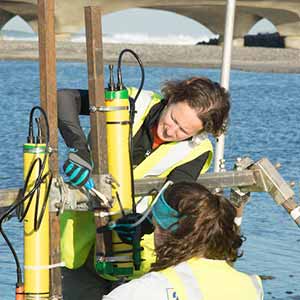
Researchers at Scripps Institution of Oceanography, UC San Diego have developed a new method for improving atmospheric river forecasts based on collecting special observations using two aircraft in atmospheric rivers over the northeast Pacific Ocean. The method was used for the first time in February in National Weather Service-directed flights over the Pacific Ocean.
For as high-tech as Department of Homeland Security operations have become (think ground-penetrating radar and predator drones), radio communications for the federal agency remain entrenched in the previous century. Customs and Border Protection agents, for example, alternate between cell phones and handheld radios depending on the availability of broadband commerical networks — a cumbersome approach that may require switching between technologies in the midst of sometimes tense scenarios.
UC San Diego’s Entrepreneurs-in-Residence program, which currently features three savvy business professionals who help advise students on start-up ideas, has gained two additional experts.
Composer Hilda Paredes used the Mayan calendar as the basis for her solo percussion piece, “Tzolkin,” with soft eerie pulses suggesting the passage of ancient time. In a sense, her music bridged the divide between modern Mexico and its poor indigenous communities. Paredes’ work, and other compositions from around the world, will be performed Feb. 26 – 28 at UC San Diego Department of Music’s Intercultural Music Conference (ICM). More than 80 composers, scholars and performers will present three days of lectures, concerts and panel discussions exploring music in our rapidly evolving intercultural landscape. They’ll consider music in the Middle East, Africa, Asia, Mexico and other locales. Concerts will showcase both traditional and contemporary music.