Adventures in Superconductivity: A Conversation with Brian Maple


Published Date
Article Content
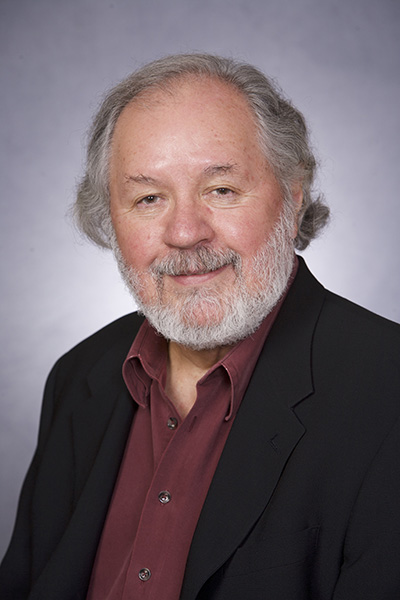
M. Brian Maple is a Distinguished Professor and holds the Bernd T. Matthias Endowed Chair in Physics at the University of California San Diego. He is also an alumnus who earned his doctorate in 1969, coming to the university when it was just beginning. In this Q&A, he discusses his work in condensed matter physics, his long tenure at UC San Diego, and a rager of a conference known as the “Woodstock of Physics.”
What kind of research do you do?
I work in an area called condensed matter physics. I'm interested in materials in which the electrons interact strongly with one another. This produces some very interesting and, in some cases, useful phenomena. One that I'm particularly interested in is superconductivity.
The most remarkable property of a superconductor is that when you cool it below a certain temperature, the superconducting critical temperature, it becomes a perfect conductor of electricity with zero resistance. One well-known application is magnetic resonance imaging (MRI), where the magnetic field in the MRI machine is produced by passing a current through very large superconducting coils that have to be cooled with liquid helium to 4.2 degrees Kelvin (-452 degrees Fahrenheit).
In addition to condensed matter physics, you are also a materials scientist.
The two go together. One effort in materials science is to develop materials that become superconducting at higher temperatures. If we can raise the critical temperature close to room temperature, this would profoundly expand the applications of superconducting materials.
One of the most interesting times in my career was 1985, when it was discovered in Switzerland that certain copper-oxide compounds exhibit superconductivity at temperatures above that of the previous record holder, a compound of niobium and germanium with a critical temperature of 23 degrees Kelvin (-418 degrees Fahrenheit). This led to a series of discoveries of other copper oxide superconductors with higher critical temperatures, the maximum of which is currently 133 degrees Kelvin (-220 degrees Fahrenheit). News about the discoveries of high temperature superconductivity in the copper oxide superconductors completely swept the world. It became so popular that I was getting popular too. All the researchers were. This all culminated in the Woodstock of Physics (see sidebar).
You earned your PhD under Bernd Matthias in 1969. What was it like working in a new department at a new university?
UC San Diego started in 1960. Keith Brueckner (founding chair of the Department of Physics) and Roger Revelle were able to attract outstanding faculty to the physics department to build new labs, design their courses and form a community of scholars. There was a lot of energy in the air. Everyone wanted to come to La Jolla. Graduate students like myself were able to interact with renowned scientists from around the world. The campus was tiny compared to now.
Before Mayer Hall was completed in 1964, we were located down the hill at Scripps Institution of Oceanography. All of the graduate students had keys to the Scripps library so we could use it at any time. Some professors had surfboards in their office, so it was fun in that respect, although we had to work really hard. To give you an example, when we took our departmental exam, which was given at the beginning of our third year, it was a 16-hour exam over four days followed by a 1.5-hour oral exam two weeks later. We also had to show reading proficiency in two foreign languages. We don’t have departmental exams anymore, but at the time, we regarded that as what we had to do, and I don't think we felt that we were treated unfairly.
Your lab is in Mayer Hall, named for Maria and Joseph Mayer. Did you ever work with Maria Mayer?
She was my teacher in nuclear physics during my second year. In addition to her lectures, we relied on the marvelous book she had written about the work she’d done that earned her the Nobel Prize in Physics (in 1963). It was very inspirational to be in her class.
UC San Diego has changed a lot and is changing a lot as we speak. What are some of the changes you've witnessed over the years?
Well, in the beginning, it was small and people got to know one another much better. We didn’t have email, so people communicated by talking to each other! I miss that a lot.
One thing I noticed during my career is, in the beginning, I could basically read all of the papers in my area. Once the high temperature superconductivity phenomenon hit us, that was the beginning of the time when I couldn't read everything.
And then also, you know, the equipment to do research is more expensive now. I have a pretty big lab, and it's been a challenge to keep everything working and up to date. It's not possible to have everything. One thing that there is not enough of is infrastructure. That's a serious problem.
And there’s also a lot more bureaucracy now. The president of the National Academy of Sciences recently noted that some researchers are spending more than 40% of their time on regulatory and administrative matters.
You're retired, but still an active researcher. What are you working on now?
Well, I continue to work on unconventional types of superconductors, including the copper oxides. They’re more complex and the interactions that bring about the superconductivity are not really well-understood. I find them interesting and intellectually challenging just because we don't understand them. A lot of them are superconductive at rather low temperatures, so they're not going to solve any energy problems, but some of them might actually be used in quantum computing.
What's your favorite place on campus?
Well, I'll tell you, one of my favorite places is where the talking trees are. The one by the library doesn't talk, but there are two of them in the eucalyptus grove that talk. One of them used to play country western music and the other one would recite poetry. I would say that's one of the more amusing parts of the campus.
You've been here for a long time. What do you love the most about UC San Diego?
I like the proximity to the ocean and the eucalyptus trees. I've grown with it, so to speak. We’ve grown together. And after all these years, the feeling's still, you know, pretty good.

Brian and wife Margaret in Cancun, Mexico (1978).
View the accompanying photo essay, "Adventures in Superconductivity: a Career in Photos."
Share This:

Stay in the Know
Keep up with all the latest from UC San Diego. Subscribe to the newsletter today.
