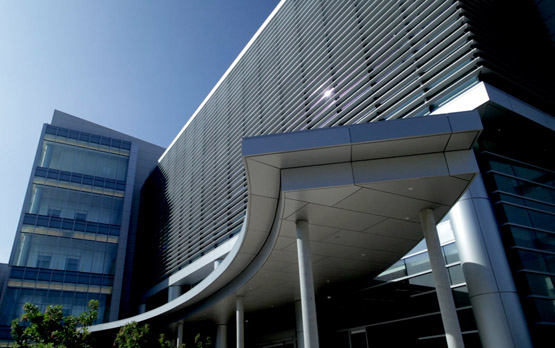
In late May the California Institute for Telecommunications and Information Technology (Calit2) hosted PervasiveHealth -- the 6th International Conference on Pervasive Computing Technologies for Healthcare.
Researchers at the University of California, San Diego Jacobs School of Engineering have developed a technique that enables metallic nanocrystals to self-assemble into larger, complex materials for next-generation antennas and lenses.
In the June 13 issue of Science Translational Medicine, an international team led by researchers from the University of California, San Diego School of Medicine reports that the new technology of exome sequencing is not only a promising method for identifying disease-causing genes, but may also improve diagnoses and guide individual patient care.
For many beach-goers summertime means shredding waves. It is estimated that more than 17 million Americans are active surfers, including one million in California alone. Even though the benefits for the body and mind are unquestionable, there are inherent health risks associated with the sport.
WANTED: Members of the public willing to help scientists capture key seismic data to improve scientific understanding of earthquakes, provide detailed information on how they shape Southern California and aid earthquake emergency response efforts.
In a study of more than 1,000 adults, researchers at the University of California, San Diego, found that individuals taking cholesterol-lowering statin drugs are more likely than non-users to experience decreased energy, fatigue upon exertion, or both. The researchers suggest that these findings should be taken into account by doctors when weighing risk versus benefit in prescribing statins.