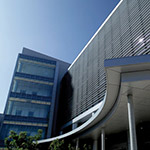
UC San Diego Health System and Imperial Valley Family Care Medical Group (IVFCMG) are pleased to announce a comprehensive affiliation that will enhance the depth and quality of multi-specialty health care services and clinical trials available to patients in the Imperial Valley and surrounding communities.
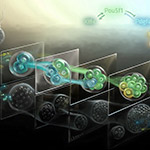
San Diego, Calif., Nov. 25, 2014 -- Bioengineers at the University of California, San Diego have discovered that mouse embryos are contemplating their cellular fates in the earliest stages after fertilization when the embryo has only two to four cells, a discovery that could upend the scientific consensus about when embryonic cells begin differentiating into cell types. Their research, which used single-cell RNA sequencing to look at every gene in the mouse genome, was published recently in the journal Genome Research. In addition, this group published a paper on analysis of ”time-course”single-cell data which is taken at precise stages of embryonic development in the journal of Proceedings of the National Academy of Sciences.
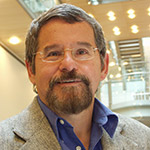
NanoEngineering professor Joseph Wang has been named to the Science Applications International Corporation (SAIC) Endowed Chair in Engineering at the University of California, San Diego’s Jacobs School of Engineering. Wang is consistently one of the world’s most cited engineers and chemists and a recognized leader in multiple fields including nanomachines, nanobioelectronics and sensing technologies. He currently serves as chair of the Department of NanoEngineering and director of the Center for Wearable Sensors at the UC San Diego Jacobs School of Engineering.
The bacterium Helicobacter pylori is strongly associated with gastric ulcers and cancer. To combat the infection, researchers at University of California, San Diego School of Medicine and Jacobs School of Engineering developed LipoLLA, a therapeutic nanoparticle that contains linolenic acid, a component in vegetable oils.
UC San Diego Health System in partnership with the U.S. Hereditary Angioedema Association (HAEA), a non-profit patient advocacy organization, has opened the nation’s first dedicated center for diagnosing and treating diverse forms of swelling, known collectively as angioedema.
The American Association for the Advancement of Science (AAAS), the largest general science organization in the United States, has awarded the distinction of Fellow to three UC San Diego professors.