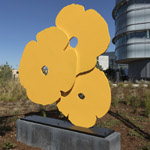
Modern hospitals are designed to aid healing in every possible space, from operating rooms and recovery areas to cafeterias and lobbies. One way is through art, and the new Jacobs Medical Center at UC San Diego Health reflects this with an extraordinary collection of paintings, photographs, sculptures, and other mediums, by renowned artists that are featured on every floor and inside every patient room throughout the 10-story hospital.
Engineers at the University of California San Diego have developed a new non-invasive method to detect infections in prostheses used for amputees, as well as for knee, hip and other joint replacements. The method, which is at the proof of concept stage, consists of a simple imaging technique and an innovative material to coat the prostheses.
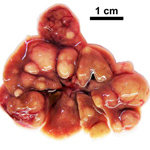
Researchers at University of California San Diego School of Medicine have discovered that lack of two types of enzymes can lead to liver disease and cancer in mice. In human liver tumors, they found that deficiencies in these two enzymes, Shp2 and Pten, are associated with poor prognosis. The study, published December 13 by Cell Reports, provides a new understanding of liver cancer development, new therapeutic approach and new mouse model for studying the disease.
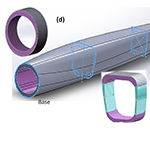
Researchers at the University of California San Diego for the first time have revealed why the shape of the feather shaft changes from round to square when it’s put under stress in a paper published in recent issue of Advanced Science.
Three teams with ties to the Jacobs School were recognized at this year’s Triton Innovation Challenge at the University of California, San Diego. LifeCycled Materials, led by two Jacobs School alumni, won the competition and a $10,000 prize. Evolution Solutions, a startup cofounded by students at the Jacobs School and the Rady School of Management, came in third and received $2,500. Finally, One Village Philippines, a team that is part of the Jacobs School’s Global TIES program, won the competition’s social venture track and $2,500.
A meta-analysis of genome-wide association studies (GWAS) has identified six loci or regions of the human genome that are significantly linked to personality traits, report researchers at University of California San Diego School of Medicine in this week’s advance online publication of Nature Genetics. The findings also show correlations with psychiatric disorders.