UC San Diego’s Divisions of Biological and Physical Sciences will launch a Research Communications program designed to address that need. Funded by a two-year, $225,000 grant from the Gordon and Betty Moore Foundation, the new effort seeks to improve the ability of faculty members, postdoctoral fellows and other researchers on campus to communicate their work to the public.
Researchers at Skaggs School of Pharmacy and Pharmaceutical Sciences at University of California San Diego mined the FDA Adverse Effect Reporting System (FAERS) database for depression symptoms in patients taking ketamine for pain. They found that depression was reported half as often among the more than 41,000 patients who took ketamine, as compared to patients who took any other drug or drug combination for pain.
The U.S. National Academy of Sciences announced today the membership election of Christopher K. Glass, MD, PhD, professor in the Departments of Medicine and Cellular and Molecular Medicine at University of California San Diego School of Medicine.
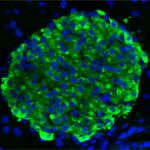
Pancreatic beta cells help maintain normal blood glucose levels by producing the hormone insulin — the master regulator of energy (glucose). Impairment and the loss of beta cells interrupts insulin production, leading to type 1 and 2 diabetes. Using single-cell RNA sequencing, researchers at University of California San Diego School of Medicine have, for the first time, mapped out pathways that regulate beta cell growth that could be exploited to trick them to regenerate.
The San Diego Supercomputer Center (SDSC) at UC San Diego has been granted a supplemental award from the National Science Foundation (NSF) to double the number of graphic processing units, or GPUs, on its petascale-level Comet supercomputer in direct response to growing demand for GPU computing across a wide range of research domains.
Nonalcoholic fatty liver disease (NAFLD) — a condition that can lead to liver cirrhosis and cancer — isn’t typically detected until well advanced. Even then, diagnosis requires a biopsy. To more easily detect NAFLD, UC San Diego School of Medicine researchers and their collaborators report that the microbial makeup of a patient’s stool — gut microbiome — can be used to predict advanced NAFLD with 88 to 94 percent accuracy. The study is published May 2 in Cell Metabolism.