Capitalism’s Green Revolution
The world is making modest cuts in global emissions, but it will require larger incentives to attract the private capital needed to take decarbonization from an intriguing technological concept to reality.
The world is making modest cuts in global emissions, but it will require larger incentives to attract the private capital needed to take decarbonization from an intriguing technological concept to reality.
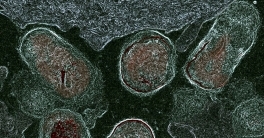
New findings from researchers at University of California San Diego shed light on why bacterial vaginosis, a common and seemingly benign condition of the vaginal microbiome, is linked to pregnancy loss, preterm birth and other health complications.
For the first time, scientists at UC San Diego’s Scripps Institution of Oceanography have published nearly four decades’ worth of dissolved carbon dioxide measurements from waters off Southern California.
A 4 1/2-minute video, with edited transcript and photos, provides highlights of the UC San Diego Qualcomm Institute’s multidisciplinary facilities used by scientists, artists, engineers and entrepreneurs.
A team of UC San Diego Herbert Wertheim School of Public Health and Human Longevity Science along with Kaiser Permanente Washington Health Research Institute researchers employed hearing tests and magnetic resonance imaging (MRI) to determine whether hearing impairment is associated with differences
“Hurricane Hunter” aircraft will fly over the Pacific Ocean starting this November as part of Atmospheric River Reconnaissance program (AR Recon), led by the Center for Western Weather and Water Extremes (CW3E) at UC San Diego’s Scripps Institution of Oceanography.
Keep up with all the latest from UC San Diego. Subscribe to the newsletter today.